12 Common Toy Myths Parents Still Believe (And the Truth Behind Them)
Introduction
Spend enough time around parents and you'll hear plenty of confident advice about toys.
"Wooden toys are always better."
"Educational toys make children smarter."
"The more toys a child owns, the happier they'll be."
Most of these statements are repeated so often that they begin to sound like facts.
But are they?
Not always.
Some are based on old ideas that have been passed from one generation to the next. Others started as clever marketing messages that gradually became accepted as common knowledge.
The problem is that believing these myths can lead parents to spend money unnecessarily, overlook excellent toys or feel guilty about choices that are perfectly reasonable.
So, let's separate fact from fiction.
Myth #1: Expensive Toys Are Always Better
Walk into any toy shop and it's easy to assume that the highest-priced toy must also be the highest-quality one.
Sometimes that's true.
Often, it isn't.
Price reflects many things besides quality, including branding, licensing, advertising and packaging.
A simple construction toy used every weekend for years usually offers far greater value than an expensive electronic gadget that loses its appeal after a fortnight.
Instead of asking, "How much does it cost?", ask:
"How many hours of meaningful play could this create?"
That's a much better measure of value.
Myth #2: Educational Toys Automatically Create Smarter Children
The word educational appears on thousands of toy boxes.
It's become one of the most powerful marketing terms in the toy industry.
Yet children don't suddenly become better learners because a label says so.
They learn by asking questions.
They learn by making mistakes.
They learn by pretending, experimenting and solving problems.
A cardboard box can teach creativity.
A pile of blankets can teach teamwork.
A pretend café can develop language skills.
Learning comes from the way children play—not simply from the label on the packaging.
Myth #3: More Toys Mean More Fun
This idea sounds logical.
If ten toys are fun, then fifty toys must be even better.
In reality, many parents notice the opposite.
Too many choices often lead to shorter attention spans and constant switching between activities.
Children don't always need more toys.
Sometimes they simply need fewer distractions.
Myth #4: Boys and Girls Need Different Toys
Children are naturally curious.
They enjoy building, pretending, creating, exploring and solving problems.
Those interests aren't limited by gender.
A girl who enjoys construction sets is developing valuable spatial skills.
A boy who loves a play kitchen is practising imagination, communication and everyday life skills.
The most important question isn't whether a toy is marketed towards boys or girls.
It's whether it matches the individual child sitting in front of you.
Myth #5: Electronic Toys Are Always Bad
Electronic toys often receive criticism.
The reality is more balanced.
Some electronic toys encourage curiosity, music, coding or problem-solving.
Others simply entertain for a few minutes before becoming repetitive.
The technology itself isn't the deciding factor.
The quality of interaction is.
A toy that encourages children to think, explore and participate usually provides more lasting value than one that does everything automatically.
Myth #6: A Child Needs the Latest Trending Toy
Every year has its "must-have" toy.
Parents queue outside shops.
Social media fills with unboxing videos.
Children talk about it in the playground.
A few months later, another trend replaces it.
Trendy toys can certainly be fun, but they rarely define a happy childhood.
Children remember experiences far more than fashions. A toy that encourages years of imaginative play often becomes far more meaningful than one that was simply popular for a single season.
Myth #7: Wooden Toys Are Always Better Than Plastic Toys
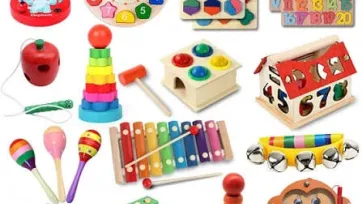
Wooden toys have become increasingly popular, and for good reason. They're often durable, beautifully made and designed for open-ended play.
But that doesn't automatically make every plastic toy a poor choice.
Many high-quality plastic toys are safe, long-lasting and designed to support creativity just as effectively.
Rather than focusing on the material, look at the overall quality, safety and play value.
A well-designed toy is a good toy, regardless of whether it's made from wood or plastic.
Myth #8: Children Should Always Play Independently
Independent play is valuable.
But expecting children to entertain themselves all day isn't realistic.
Many children need someone to help them begin.
Five minutes of shared play can often lead to an hour of independent play afterwards.
The goal isn't to avoid playing with your child.
It's to gradually build the confidence that allows them to continue the adventure on their own.
Myth #9: Every Toy Must Have a Learning Purpose
Parents naturally want every purchase to benefit their child.
As a result, it's easy to feel that every toy should teach letters, numbers or science.
But childhood isn't a classroom.
Sometimes the greatest lesson comes from laughter, storytelling and make-believe.
A game that encourages siblings to cooperate, negotiate and solve disagreements is teaching valuable life skills, even if it never mentions the alphabet.
Play doesn't always need an obvious educational objective to be worthwhile.
Myth #10: If a Child Gets Bored, the Toy Has Failed
Boredom has become one of the most misunderstood parts of childhood.
Many parents immediately search for another activity or another toy.
Yet boredom often acts as the starting point for creativity.
Without constant entertainment, children begin inventing games of their own.
They build forts.
They organise treasure hunts.
They create imaginary worlds from ordinary household objects.
Sometimes the best thing a toy can do is leave enough space for boredom to become imagination.
Myth #11: Bigger Toys Are Better Toys
Large toy kitchens, giant playhouses and oversized racing tracks certainly attract attention.
But size doesn't automatically increase play value.
Some of the most loved toys fit inside a small storage basket.
Building blocks.
Toy animals.
Craft supplies.
Card games.
These simple items often provide years of enjoyment because they can be used in hundreds of different ways.
A toy should earn its place through play, not through the amount of space it occupies.
Myth #12: Once a Child Stops Playing With a Toy, It's Finished
Many parents donate toys as soon as they seem forgotten.
Sometimes that's the right decision.
Often, however, the toy simply needs a break.
Children's interests naturally change throughout the year.
A train set ignored during summer holidays may become the favourite activity on rainy winter afternoons.
Rotating toys instead of permanently removing them often makes old favourites feel exciting again.
The toy hasn't changed.
The timing has.
The Truth Behind Every Myth
When you look closely, all twelve myths point towards the same lesson.
Children don't need the loudest toy.
They don't need the newest toy.
They don't need the biggest toy.
Most of all, they don't need adults to believe every marketing message printed on a colourful box.
What they need are opportunities to imagine, experiment, create stories and enjoy the freedom to play in their own way.
That's something no trend can replace.
Frequently Asked Questions
Are expensive toys worth buying?
Sometimes, but price alone doesn't guarantee quality or long-term play value. Consider durability, versatility and how often your child is likely to use the toy.
Should every toy be educational?
No. Children learn through many different forms of play, including imaginative games, outdoor activities and creative projects. A toy doesn't need an educational label to support healthy development.
Is independent play important?
Yes, but it develops gradually. Many children benefit from a parent helping them start a game before continuing independently.
Are trendy toys a bad choice?
Not necessarily. If a child genuinely enjoys a particular trend, there's nothing wrong with buying an occasional popular toy. The key is not relying on trends alone when building a toy collection.
Can toy rotation really make a difference?
For many families, yes. Rotating toys reduces clutter and often renews a child's interest in toys they had previously ignored.
Final Thoughts
Parenting comes with plenty of advice, and not all of it stands the test of time.
The toy world is no different.
Some ideas survive because they're backed by experience and observation.
Others survive simply because they've been repeated often enough.
The next time you hear someone insist that only expensive toys matter, that every toy must be educational or that children always need more, pause for a moment.
Look at how your own child actually plays.
Their imagination will usually tell you far more than any marketing campaign ever could.
And in the end, that's the most reliable guide any parent can have.