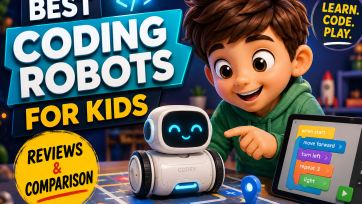
Best Electronic Toys for Kids

Best Electronic Toys for Kids: A Complete Guide to Smart, Fun, and Educational Play

Electronic toys have transformed the way children play, learn, and explore the world around them. From interactive robots and talking learning devices to remote control cars and coding kits, today's electronic toys offer far more than flashing lights and sound effects. They combine entertainment with education, helping children develop creativity, critical thinking, and problem-solving skills while keeping them engaged for hours.

For parents, choosing the right electronic toy can be challenging because the market is filled with countless options. Some toys are designed purely for fun, while others encourage learning through hands-on activities. Understanding the difference can help you make a smarter investment for your child.

This guide explains everything you need to know about the best electronic toys for kids, including their benefits, different types, safety considerations, and practical buying tips.

What Are Electronic Toys?

Electronic toys are toys that use electricity or rechargeable batteries to perform interactive functions. They may include lights, sounds, movement, voice recognition, sensors, or programmable features that make playtime more engaging.

Unlike traditional toys, electronic toys respond to a child's actions, creating an interactive experience that encourages learning and exploration.

Popular electronic toys include:

  • Remote control cars
  • Interactive robots
  • Coding toys
  • Talking learning tablets
  • Musical instruments
  • Smart building sets
  • Electronic pets
  • Toy drones
  • RC helicopters
  • Educational gaming devices

These toys appeal to children of different ages and interests, making them one of the most popular toy categories today.

Why Electronic Toys Are So Popular

Children enjoy toys that respond instantly to their actions. Whether driving a remote control car, programming a robot, or playing an interactive learning game, electronic toys make children feel actively involved.

Parents also appreciate these toys because many combine fun with valuable educational experiences. Instead of passive entertainment, quality electronic toys encourage children to think, experiment, and solve problems independently.

When used in moderation, they can become an excellent addition to a balanced play routine.

Benefits of Electronic Toys

Well-designed electronic toys offer numerous developmental advantages.

Some of the most important benefits include:

  • Improved hand-eye coordination
  • Better concentration
  • Stronger memory
  • Faster problem-solving
  • Increased creativity
  • Enhanced logical thinking
  • Greater confidence
  • Better reaction time

Many electronic toys also introduce children to technology in a safe and age-appropriate way.

Remote Control Toys Improve Coordination

Remote control vehicles remain one of the most popular electronic toys for children.

Driving an RC racing car through obstacles requires quick thinking, careful steering, and precise timing. These activities naturally improve hand-eye coordination, motor skills, and spatial awareness.

Rechargeable RC cars are especially popular because they offer longer play sessions and lower running costs than disposable battery-powered alternatives.

Many families also enjoy racing together, turning playtime into a shared experience.

Interactive Robots Encourage Learning

Modern robotic toys can walk, dance, answer questions, follow commands, and even introduce children to basic programming concepts.

Interactive robots help children develop:

  • Logical thinking
  • Communication
  • Creativity
  • Problem-solving
  • Curiosity about technology

Many beginner robots are specifically designed for younger children, making learning both simple and enjoyable.

Coding Toys Introduce Future Skills

Coding is becoming an increasingly valuable skill.

Fortunately, many electronic toys introduce coding without requiring children to read complicated computer languages.

Instead, they use colorful buttons, blocks, puzzles, and simple commands to teach logical thinking and sequencing.

Coding toys encourage experimentation while building confidence.

Electronic Learning Tablets

Learning tablets designed for children provide educational games covering subjects such as:

  • Alphabet recognition
  • Numbers
  • Shapes
  • Vocabulary
  • Spelling
  • Basic mathematics
  • Music
  • Memory games

Unlike ordinary tablets, children's learning devices usually include age-appropriate content with fewer distractions.

STEM Electronic Toys

STEM stands for Science, Technology, Engineering, and Mathematics.

Electronic STEM toys combine learning with practical activities.

Popular options include:

  • Robotics kits
  • Circuit-building projects
  • Engineering sets
  • Electronic experiment kits
  • Coding robots
  • Smart construction toys

These activities help children understand technology through hands-on exploration.

Musical Electronic Toys

Electronic musical toys encourage creativity while introducing children to rhythm and sound.

Popular choices include:

  • Electronic keyboards
  • Drum sets
  • Microphones
  • DJ mixers
  • Light-up pianos
  • Musical learning toys

Music helps improve memory, listening skills, coordination, and self-expression.

Electronic Pets

Interactive electronic pets respond to touch, movement, sound, and voice commands.

Children enjoy feeding, caring for, and playing with these digital companions while learning responsibility and empathy.

Electronic pets are especially suitable for families who cannot keep real animals at home.

Educational Gaming Devices

Not all electronic games are purely for entertainment.

Many educational gaming systems include activities that improve:

  • Reading
  • Mathematics
  • Logic
  • Memory
  • Vocabulary
  • Science knowledge

Parents should always choose games designed specifically for children's learning and development.

Choosing Electronic Toys by Age

Every age group benefits from different types of electronic toys.

For preschoolers:

  • Musical toys
  • Talking books
  • Interactive learning devices
  • Beginner RC cars

For young children:

  • Coding toys
  • Educational tablets
  • Electronic puzzles
  • Simple robots

For older children:

  • Advanced STEM kits
  • Programmable robots
  • Drones
  • Engineering projects

Selecting age-appropriate toys helps children stay interested without becoming frustrated.

Rechargeable vs Battery-Powered Electronic Toys

Many electronic toys now include rechargeable batteries.

Rechargeable models offer several advantages:

  • Lower long-term cost
  • Less battery waste
  • Better convenience
  • More consistent performance
  • Environmentally friendly

Battery-powered toys may still be suitable for occasional use but usually become more expensive over time.

Safety Tips for Parents

Electronic toys should always be used responsibly.

Parents should:

  • Follow age recommendations.
  • Supervise younger children.
  • Use approved chargers.
  • Avoid exposing toys to water unless designed for it.
  • Inspect batteries regularly.
  • Keep small components away from toddlers.
  • Buy from trusted brands.

Safe use ensures children enjoy electronic toys without unnecessary risks.

Reducing Screen Time While Using Electronic Toys

Many parents worry about increasing screen time.

Fortunately, most electronic toys encourage physical interaction rather than passive viewing.

Driving an RC car, programming a robot, or conducting a science experiment requires active participation, making these toys very different from watching television or browsing videos.

A healthy balance between traditional toys, outdoor activities, and electronic toys provides the best overall experience.

Common Mistakes When Buying Electronic Toys

Parents often make similar buying mistakes.

Avoid:

  • Buying toys that are too advanced.
  • Ignoring battery life.
  • Choosing poor-quality products.
  • Overlooking safety certifications.
  • Purchasing toys based only on advertising.
  • Ignoring your child's interests.

The best toy is one that matches both your child's age and personality.

Why Electronic Toys Make Great Gifts

Electronic toys combine excitement with education, making them excellent gifts for birthdays, holidays, and special celebrations.

Whether it's a remote control racing car, an interactive robot, or a STEM science kit, these toys create memorable experiences while encouraging valuable learning.

Parents also appreciate gifts that provide long-term engagement rather than short-lived entertainment.

Frequently Asked Questions

Are electronic toys good for children?

Yes. High-quality electronic toys support learning, creativity, coordination, and problem-solving when used appropriately.

What is the best electronic toy for beginners?

Remote control cars, interactive learning tablets, and beginner robots are excellent choices for children starting with electronic toys.

Are rechargeable electronic toys better?

Generally, yes. Rechargeable toys reduce ongoing costs, create less waste, and offer greater convenience.

Can electronic toys replace traditional toys?

No. A healthy balance between electronic toys, outdoor activities, books, puzzles, and imaginative play provides the best developmental benefits.

Final Thoughts

The best electronic toys for kids do much more than entertain. They encourage creativity, improve coordination, strengthen problem-solving skills, and introduce children to technology in a fun and age-appropriate way.

Whether your child enjoys racing remote control cars, building robots, experimenting with STEM kits, or learning through interactive games, the right electronic toy can provide years of enjoyment while supporting healthy development. By choosing safe, durable, and educational products, parents can create play experiences that are both exciting and meaningful.
Advertisement
Best Educational Toys for Kids
Best Educational Toys for Kids: A Complete Guide to Learning Through Play Children learn best when they are actively engaged, curious, and having fun. That is why educational toys have become one of the most valuable investments parents can make. Instead of simply entertaining children for a few minutes, these toys encourage creativity, improve problem-solving skills, and support healthy cognitive, emotional, and physical development. Today's educational toys go far beyond alphabet blocks and counting games. Modern options include STEM kits, coding toys, building sets, puzzles, science experiments, musical instruments, and interactive learning games that make education enjoyable rather than stressful. If you're looking for the best educational toys for kids, this comprehensive guide will help you understand which toys provide real learning value and how to choose the right ones for your child's age and interests. What Are Educational Toys? Educational toys are designed to help children develop important skills while they play. They combine entertainment with learning, allowing children to explore new ideas naturally instead of feeling like they are studying. A well-designed educational toy encourages children to ask questions, solve problems, experiment with different ideas, and develop confidence through hands-on activities. Unlike many electronic gadgets that simply capture attention, educational toys actively involve children in the learning process. Why Educational Toys Matter Children absorb information much faster when learning feels enjoyable. Educational toys create opportunities for discovery, creativity, and independent thinking. These toys help children: Improve concentration Strengthen memory Build problem-solving skills Develop creativity Increase confidence Improve communication Encourage curiosity Support emotional growth Play-based learning also helps children remember concepts longer because they experience them instead of simply reading or hearing about them. Building Toys Encourage Creative Thinking Building toys remain among the most popular educational toys for children of all ages. Whether children are creating towers, bridges, vehicles, castles, or entire cities, they constantly practice planning, experimenting, and solving challenges. Building activities teach children that mistakes are part of learning. When a structure falls, they naturally try again using a better approach. Popular options include: Building blocks Magnetic tiles Construction kits Wooden block sets Engineering toys These toys improve both creativity and logical thinking. STEM Toys Prepare Kids for the Future STEM stands for Science, Technology, Engineering, and Mathematics. STEM toys encourage children to explore how things work through hands-on learning instead of memorization. Popular STEM toys include: Beginner robotics kits Coding games Engineering projects Magnetic construction sets Circuit building kits Science experiment boxes These activities introduce important concepts while making learning exciting and interactive. Educational Puzzles Improve Problem-Solving Skills Puzzles teach children how to recognize patterns, organize information, and think critically. As children complete puzzles, they learn patience, observation, and persistence. Different puzzle types include: Alphabet puzzles Number puzzles Animal puzzles World map puzzles Shape puzzles Logic puzzles Each completed puzzle builds confidence while strengthening memory and concentration. Learning Through Pretend Play Many parents underestimate the educational value of pretend play. When children pretend to be doctors, teachers, chefs, scientists, or firefighters, they develop communication skills, emotional intelligence, and creativity. Excellent pretend play toys include: Kitchen playsets Doctor kits Cash registers Tool sets Grocery stores Dollhouses Puppet theaters These activities encourage storytelling and help children understand real-world situations. Arts and Crafts Build Creativity Creative activities allow children to express themselves while developing important physical skills. Drawing, painting, cutting, folding, and sculpting improve hand strength and fine motor control. Popular educational craft toys include: Coloring books Watercolor sets Clay modeling kits DIY craft boxes Sticker activities Bead-making kits These projects also teach patience and attention to detail. Musical Toys Support Brain Development Music stimulates multiple areas of the brain at the same time. Simple musical toys help children develop: Listening skills Rhythm Coordination Creativity Memory Self-expression Keyboards, drums, xylophones, tambourines, and beginner instruments encourage children to experiment while having fun. Educational Board Games Teach Life Skills Board games are excellent learning tools because they combine fun with valuable social experiences. Children learn: Taking turns Following rules Strategic thinking Teamwork Fair play Decision-making Family game nights also strengthen relationships while encouraging healthy communication. Remote Control Toys Can Be Educational Too Many people think remote control toys are only designed for entertainment. In reality, RC toys help children improve: Hand-eye coordination Spatial awareness Reaction time Focus Motor skills Problem-solving Driving a remote control car around obstacles requires concentration and precise movements, making it an enjoyable learning experience. Science Kits Inspire Curiosity Science experiment kits introduce children to fascinating concepts through safe and simple activities. Popular experiments include: Volcano models Crystal growing Magnet activities Water experiments Weather projects Plant-growing kits Hands-on science helps children understand how the world works while encouraging curiosity. Outdoor Educational Toys Learning should not be limited to indoor activities. Outdoor educational toys help children stay active while exploring nature. Some excellent choices include: Gardening kits Nature explorer sets Insect observation boxes Binoculars Treasure hunt games Sports equipment Outdoor play improves physical health while teaching children about plants, animals, and the environment. Choosing Educational Toys by Age Every child develops differently, but selecting toys that match their age helps maintain interest and confidence. For toddlers: Shape sorters Stacking toys Soft alphabet blocks For preschoolers: Building blocks Number games Alphabet puzzles Pretend play sets For school-age children: STEM kits Robotics Advanced puzzles Science projects Coding games Age-appropriate toys create the right balance between challenge and enjoyment. How to Choose the Best Educational Toy Before purchasing, ask yourself a few important questions. Does the toy encourage creativity? Will it keep my child engaged for a long time? Does it match my child's interests? Is it safe? Can it be used in different ways? The best educational toys grow with children and continue offering new ways to play over time. Safety Tips for Parents Educational toys should always meet recognized safety standards. Before buying: Check the recommended age. Choose non-toxic materials. Avoid sharp edges. Inspect small parts. Buy from trusted manufacturers. Read product reviews. Regularly checking toys for wear also helps prevent accidents. Common Mistakes Parents Make Many parents unintentionally choose toys that provide very little educational value. Common mistakes include: Buying toys only because they are popular. Choosing toys that are too difficult. Ignoring durability. Focusing only on electronic features. Purchasing too many similar toys. A smaller collection of high-quality educational toys often provides better long-term benefits than a room full of short-lived entertainment. Why Educational Toys Make Wonderful Gifts Educational toys combine fun with lifelong learning. Whether for birthdays, holidays, or special occasions, they continue benefiting children long after the excitement of opening the gift has passed. Parents also appreciate gifts that encourage creativity, independence, and healthy development. Frequently Asked Questions What are the best educational toys for kids? Building blocks, STEM kits, puzzles, pretend play sets, musical instruments, science kits, arts and crafts, and educational board games are among the best choices. At what age should children start using educational toys? Children can begin using educational toys from infancy with age-appropriate options such as stacking toys, soft blocks, and sensory activities. Are electronic educational toys better? Not necessarily. Many traditional toys provide excellent educational value by encouraging creativity, imagination, and hands-on learning. Do educational toys improve school performance? Educational toys help develop skills such as concentration, memory, problem-solving, and communication, all of which support classroom learning. Final Thoughts The best educational toys do much more than keep children busy. They inspire curiosity, encourage creativity, develop confidence, and help children build essential life skills through enjoyable play. From building blocks and STEM kits to science experiments, puzzles, musical instruments, and remote control toys, every educational toy offers a unique opportunity for growth. The key is choosing toys that match your child's interests, abilities, and stage of development. When learning becomes fun, children stay curious, motivated, and eager to explore the world around them. Investing in high-quality educational toys is an investment in your child's future, providing countless opportunities to learn while making wonderful memories through play.
Best Puzzle Toys for Kids in 2026
Best Puzzle Toys for Kids in 2026: Fun Challenges That Build Brilliant Minds Puzzle toys have been a favourite among families for generations, and in 2026 they remain one of the smartest educational toys parents can buy. More than just a fun activity, puzzles help children think logically, recognise patterns, solve problems, and develop patience. Every completed puzzle gives children a sense of achievement while strengthening important cognitive skills that support learning both at home and at school. Today's puzzle toys are available in a wide variety of styles, including wooden puzzles, jigsaw puzzles, 3D puzzles, magnetic puzzles, brain teasers, number puzzles, and STEM challenge games. With options suitable for every age, puzzle toys continue to provide hours of screen-free entertainment while encouraging healthy brain development. If you're searching for a toy that combines learning, creativity, and lasting value, puzzle toys are an excellent choice. Why Puzzle Toys Are Important Children naturally enjoy solving challenges. Puzzle toys encourage them to think carefully, test different ideas, and learn from mistakes without feeling pressured. Unlike many electronic toys that provide instant answers, puzzles teach persistence. Children discover that success often comes through patience, observation, and practice. These experiences help build confidence while preparing children for more complex learning throughout their education. Benefits of Puzzle Toys Puzzle toys support many areas of child development. Some of the biggest benefits include: Improve problem-solving skills Strengthen memory Develop logical thinking Improve concentration Build patience Strengthen fine motor skills Improve hand-eye coordination Encourage independent learning Reduce screen time Children also learn to recognise patterns and relationships between shapes, colours, and objects. Wooden Puzzles for Toddlers Wooden puzzles remain one of the best first puzzles for young children. Popular designs include: Animal puzzles Alphabet puzzles Number puzzles Shape puzzles Vehicle puzzles Large wooden pieces are easy for little hands to hold while improving grip strength and coordination. Jigsaw Puzzles Classic jigsaw puzzles continue to be one of the most popular family activities. Available in hundreds of themes, children can choose puzzles featuring: Dinosaurs Animals Space Princesses Vehicles Nature Maps Cartoon characters Completing larger puzzles encourages teamwork when family members work together. 3D Puzzle Toys Three-dimensional puzzles offer an exciting challenge for older children. Popular models include: Famous landmarks Castles Vehicles Animals Spacecraft Buildings 3D puzzles improve spatial awareness while encouraging careful planning. Magnetic Puzzle Games Magnetic puzzles are ideal for travel because the pieces stay securely in place. Children can enjoy them: In the car On aeroplanes During holidays At restaurants While visiting relatives Portable magnetic puzzles make educational entertainment available almost anywhere. Brain Teasers for Older Children Brain teaser puzzles challenge children to think creatively. Examples include: Logic cubes Sliding puzzles IQ games Maze puzzles Sequential reasoning games These activities encourage children to develop different strategies instead of relying on trial and error alone. STEM Puzzle Toys Many modern puzzle toys combine traditional problem-solving with STEM education. Children explore: Engineering Geometry Mathematics Physics Structural design These activities prepare children for future learning while making science enjoyable. Puzzle Toys Improve Fine Motor Skills Young children strengthen their hand muscles every time they pick up, rotate, and position puzzle pieces. These movements help develop: Pencil control Writing readiness Hand strength Finger coordination Fine motor development supports many everyday activities beyond play. Puzzle Toys Encourage Family Time Puzzle solving is an activity the whole family can enjoy together. Working on puzzles encourages: Communication Teamwork Patience Shared problem-solving Family puzzle nights also create memorable experiences away from digital devices. Choosing the Right Puzzle Toy Before buying, consider: Your child's age Number of puzzle pieces Educational value Build quality Safety certifications Replay value A puzzle should provide a challenge without becoming frustrating. Safety Tips Choose puzzle toys that: Match the recommended age Use non-toxic materials Have smooth edges Meet recognised safety standards Avoid very small pieces for younger children Always supervise toddlers during puzzle play. Common Buying Mistakes Parents often buy puzzles that are either too easy or far too difficult. Avoid: Low-quality cardboard Tiny pieces for young children Poorly printed images Weak storage boxes Age-inappropriate difficulty levels Choosing the correct challenge level helps children stay motivated. Why Puzzle Toys Make Excellent Gifts Puzzle toys are among the most practical educational gifts available. They're perfect for: Birthdays Christmas School holidays Family game nights Rainy-day activities Unlike many toys that lose their appeal quickly, puzzles remain enjoyable because children can revisit them repeatedly or progress to more challenging designs. Frequently Asked Questions What are the best puzzle toys for children? Wooden puzzles, jigsaw puzzles, magnetic puzzles, brain teaser games, STEM puzzles, and 3D construction puzzles are among the best options. At what age can children start using puzzles? Simple wooden puzzles are suitable from around 12 to 18 months, while larger jigsaw puzzles and brain teasers are better suited to older children. Do puzzle toys help brain development? Yes. Puzzle toys improve memory, logical thinking, concentration, problem-solving, and spatial awareness while encouraging independent learning. Are wooden puzzles better than cardboard puzzles? Both are excellent choices. Wooden puzzles are generally more durable for younger children, while cardboard jigsaw puzzles often offer greater variety and complexity for older children. Final Thoughts The best puzzle toys for kids in 2026 offer much more than entertainment. They challenge young minds, improve concentration, strengthen problem-solving abilities, and encourage children to think creatively while enjoying screen-free play. From colourful wooden puzzles for toddlers to advanced STEM brain teasers and detailed 3D models for older children, puzzle toys continue to provide valuable learning opportunities at every stage of childhood. Choosing high-quality puzzle toys is an investment in your child's curiosity, confidence, and lifelong love of learning. Every completed puzzle is another step towards developing stronger thinking skills that will benefit children both in school and beyond.
Travel Toys for Toddlers and Young Children
 Travel Toys for Toddlers and Young Children: The Ultimate Parent's Guide to Stress-Free Journeys Ask any parent about travelling with a toddler, and you'll probably hear the same answer: the journey is often harder than the destination. Whether you're driving for two hours to visit grandparents, waiting at an airport for a delayed flight or taking a long train journey during the school holidays, young children can quickly become restless. Sitting still isn't something that comes naturally to them. Before long, boredom turns into frustration, and what should have been an exciting family trip can become exhausting for everyone. The good news is that the right travel toys can completely change the experience. Travel toys are designed to keep children entertained, curious and engaged while taking up very little space. More importantly, the best ones do much more than simply pass the time. They encourage creativity, improve concentration and support learning without relying on tablets or smartphones. Parents often assume they need to pack dozens of toys "just in case". In reality, a handful of carefully chosen travel toys usually works far better than an overstuffed backpack filled with items children barely touch. In this guide, you'll discover how to choose travel toys that children genuinely enjoy, which features matter most, how to avoid common buying mistakes and why simple toys often outperform expensive electronic gadgets. Why Travel Feels Different for Young Children Adults usually see travelling as part of the adventure. Children see it differently. They're expected to stay seated for long periods, follow unfamiliar routines and cope with busy, noisy environments. Even the most patient child can become overwhelmed after an hour or two. That is why travel toys should do more than distract. They should help children feel comfortable, confident and occupied while allowing parents to relax a little too. What Makes a Good Travel Toy? Not every toy belongs in a travel bag. A large construction set with hundreds of tiny pieces might be brilliant at home but quickly becomes a nightmare in a car or airport lounge. The best travel toys usually share a few important qualities: Lightweight and easy to carry. Compact enough to fit inside a backpack. Durable enough to survive frequent travel. Quiet enough for public spaces. Easy to clean. Capable of holding a child's attention for longer than a few minutes. If a toy can be dropped once without breaking and packed away in seconds, it's already ahead of many alternatives. Benefits of Travel Toys A thoughtfully packed travel toy isn't just about keeping children busy. It can make the entire journey more enjoyable for the whole family. Less Stress for Parents Every parent knows that boredom often leads to complaints, arguments and frustration. Interesting toys help prevent many of these situations before they begin. Longer Attention Spans Children who become absorbed in a puzzle, activity book or creative toy are less likely to ask every five minutes, "Are we there yet?" Encourages Independent Play One of the biggest advantages of travel toys is that children learn to entertain themselves. Parents don't need to become the full-time entertainer throughout the journey. Supports Learning Many travel toys naturally encourage counting, storytelling, matching, drawing or problem-solving. Children continue learning while believing they are simply having fun. Reduces Screen Time Digital devices have their place, particularly during very long journeys, but they don't need to become the only source of entertainment. Travel toys offer a healthier balance between technology and hands-on play. The Best Travel Toys for Toddlers Toddlers need simple activities that are easy to understand and difficult to lose. Some excellent options include: Chunky board books Reusable sticker books Water-reveal colouring books Large magnetic drawing boards Soft fabric activity books Finger puppets Shape matching games Stacking cups Sensory toys Soft dolls The aim is to provide toys that can be used independently without creating unnecessary mess. Travel Toys for Preschool Children Preschool children enjoy activities that challenge their imagination while remaining portable. Great choices include: Magnetic puzzles Small construction toys Storytelling cards Activity books Compact board games Lacing activities Reusable colouring pads Toy animals Simple card games Travel-friendly craft kits Many parents discover that one engaging activity can provide far more entertainment than several less interesting toys. Travel Toys for School-Age Children Older children usually appreciate toys that require thinking, creativity or strategy. Some excellent examples are: Logic puzzles Crossword books Sketchbooks Card games Travel chess or draughts Compact building sets Brain teaser puzzles Creative writing journals Foldable board games Educational quiz cards Children in this age group often enjoy being involved in choosing which toys to pack before travelling. How Many Travel Toys Should You Pack? One of the biggest mistakes parents make is filling an entire bag with toys. It sounds like a sensible idea, but too many choices often have the opposite effect. Children quickly move from one toy to another without becoming fully engaged with any of them. A better approach is to pack a small collection of carefully selected activities. For most journeys, this is usually enough: One creative activity, such as a colouring or drawing pad. One problem-solving toy, such as a puzzle. One imaginative toy, such as a few animal figures or finger puppets. One comfort item, especially for younger children. One "surprise" toy that isn't revealed until later in the journey. Introducing a new activity every hour or so keeps the experience fresh without overwhelming your child. Creating the Perfect Travel Activity Bag Instead of throwing toys into a backpack at the last minute, prepare a dedicated travel kit that stays ready for family trips. A well-organised travel bag might include: A reusable water colouring book Washable crayons A small notebook Magnetic puzzles Reusable sticker scenes A compact card game Healthy snacks Wet wipes Spare zip-lock bags for storage A lightweight blanket or comfort toy Keeping everything in one place saves time and prevents frantic searching during the journey. Screen Time vs Travel Toys Many parents wonder whether they should simply hand over a tablet during long trips. There's no universal right or wrong answer. Screens can be useful during lengthy flights or unexpected delays, but relying on them from the start often means children lose interest in other activities. A balanced approach usually works best. Begin the journey with books, puzzles, drawing activities or imaginative toys. If the trip is particularly long, digital entertainment can be introduced later as one part of a varied travel routine rather than the entire experience. Buying Guide Travel toys don't need to be expensive, but they do need to be practical. Before buying, ask yourself a few simple questions. Will it fit easily into a backpack? Large toys may be enjoyable at home but become inconvenient during travel. Can it survive being dropped? Travelling can be rough on toys. Choose products made from durable materials that won't break after one fall. Does it create unnecessary mess? Avoid toys with dozens of tiny pieces, loose sand, glitter or liquids that are difficult to manage while travelling. Can it be used in more than one way? Open-ended toys generally provide much better value because children invent new ways to play with them. Will my child still enjoy it after the journey? The best travel toys become part of everyday play once you're back home, making them a worthwhile investment. Safety Tips Travelling introduces different safety considerations than playing at home. Keep these recommendations in mind: Choose toys that match your child's age. Avoid toys with very small parts for toddlers. Check toys regularly for damage before travelling. Pack toys in secure containers or zip pouches. Keep favourite comfort toys within easy reach. Clean toys after trips, especially those used on public transport. Avoid heavy toys that could become hazardous during sudden stops in a vehicle. Supervise younger children when using craft materials or activity books with accessories. A little preparation helps ensure both safety and convenience throughout the journey. Common Buying Mistakes Parents often buy travel toys based on appearance rather than practicality. Here are some mistakes worth avoiding. Packing Too Many Toys More toys rarely mean more entertainment. A smaller selection usually keeps children focused for longer. Choosing Toys with Lots of Loose Pieces Missing pieces are common during travel, particularly in airports, restaurants or motorway service stations. Buying Toys That Make Loud Noises Electronic sounds may seem entertaining at home but can quickly become frustrating in shared public spaces. Ignoring Your Child's Interests A travel toy only works if your child genuinely enjoys it. Choosing activities based on their hobbies usually leads to much longer play sessions. Leaving Packing Until the Last Minute Preparing a travel kit the night before often results in forgotten essentials and unsuitable toys. Frequently Asked Questions What are the best travel toys for toddlers? Simple, lightweight toys such as reusable sticker books, water colouring books, magnetic drawing boards, soft dolls and fabric activity books are excellent choices because they are easy to carry and encourage independent play. Should children use tablets during travel? Tablets can be useful on longer journeys, but combining them with books, puzzles and creative travel toys usually creates a healthier balance and helps reduce overall screen time. How many travel toys should I take? A small collection of four to six carefully chosen activities is often enough for most day trips and holidays. Rotating them throughout the journey helps maintain interest. Are travel toys suitable for aeroplanes? Yes. Compact, quiet toys are ideal for flights because they entertain children without disturbing other passengers. What should I avoid packing? Avoid toys with tiny loose pieces, messy craft materials, loud electronic sounds or bulky items that are difficult to carry. Final Thoughts Travelling with young children will always involve a little unpredictability, but the right preparation can make a remarkable difference. Instead of relying on dozens of toys or unlimited screen time, focus on a carefully chosen selection of activities that encourage creativity, independent play and problem-solving. The best travel toys are not necessarily the newest or most expensive. They are the ones that keep children engaged, fit easily into your luggage and continue providing value long after the journey has ended. By choosing practical, durable and age-appropriate travel toys, parents can reduce stress, keep children happily occupied and turn long journeys into enjoyable family adventures rather than exhausting experiences.
Best Educational Board Games for Kids in 2026
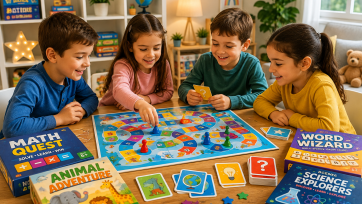
Best Educational Board Games for Kids in 2026 Board games have entertained families for generations, but today's educational board games do much more than pass the time. They help children build essential skills such as problem-solving, communication, critical thinking, teamwork, and decision-making while making learning enjoyable. Instead of relying on screens, board games encourage face-to-face interaction and create meaningful family moments. Whether your child is learning numbers, practicing reading, exploring science, or developing strategic thinking, the right educational board game can turn every game night into a valuable learning experience. Modern board games are available for toddlers, preschoolers, school-age children, and even teenagers, making them one of the most versatile educational toys available. If you're looking for the best educational board games for kids in 2026, this guide will help you choose games that are both fun and beneficial. Why Educational Board Games Matter Children naturally learn through play. Board games create opportunities for kids to solve problems, make decisions, follow rules, and think ahead while enjoying themselves. Unlike digital games, board games encourage children to communicate with family members and friends. They learn patience while waiting for their turn, experience both winning and losing gracefully, and develop important social skills that benefit them throughout life. Benefits of Educational Board Games Educational board games support many areas of child development. Some of the biggest benefits include: Improve critical thinking Strengthen memory Encourage teamwork Develop communication skills Build patience Improve concentration Teach problem-solving Reduce screen time Encourage family bonding These benefits make board games valuable long after children finish playing. Best Board Games for Toddlers Young children need simple games with large pieces and easy rules. Popular choices include: Color matching games Shape recognition games Animal matching games First counting games Simple memory games These games introduce basic concepts while improving attention and coordination. Best Board Games for Preschoolers Preschool children enjoy games that challenge them without becoming too complicated. Excellent options include: Alphabet games Number games Matching games Picture bingo Cooperative games Simple strategy games These activities support early school readiness while keeping learning exciting. Strategy Games for Older Kids As children grow older, they become ready for more advanced thinking. Strategy games help children learn: Planning Decision-making Resource management Logical reasoning Creative problem-solving Many strategy games also improve concentration because children must think several moves ahead. Word Games Improve Language Skills Board games can also strengthen reading and vocabulary. Popular word-based games help children: Learn new words Improve spelling Practice reading Build vocabulary Develop communication skills These games are especially useful for children beginning their reading journey. Math Board Games Make Learning Fun Many children enjoy mathematics more when it's presented as a game instead of homework. Math board games teach: Counting Addition Subtraction Multiplication Number recognition Money skills Learning through play often makes difficult concepts easier to understand. Science-Themed Board Games STEM education continues to grow in popularity, and science board games introduce children to fascinating topics through interactive play. Children can explore: Space Animals Human anatomy Nature Weather Engineering These games encourage curiosity while making science enjoyable. Cooperative Board Games Not every game needs a winner and a loser. Cooperative games encourage players to work together toward a shared goal. Children learn: Teamwork Communication Leadership Empathy Problem-solving These games are especially helpful for younger children learning how to cooperate with others. Board Games Build Social Skills One of the greatest advantages of board games is the opportunity to interact with others. Children learn to: Take turns Follow rules Respect others Handle disappointment Celebrate success These experiences help build emotional maturity while strengthening friendships and family relationships. Choosing the Right Board Game Before purchasing a game, consider: Your child's age Number of players Learning objectives Playing time Complexity Replay value Games that can be enjoyed repeatedly usually offer the greatest long-term value. Safety Considerations Choose board games that: Match your child's age Have durable pieces Use non-toxic materials Include clear instructions Store easily For younger children, avoid games with very small pieces that may present choking hazards. Common Buying Mistakes Parents sometimes choose games that children quickly lose interest in. Avoid: Games that are too difficult Overly long playing times Poor-quality components Games without educational value Buying only because a game is popular A game that matches your child's interests is usually the best choice. Why Board Games Make Great Gifts Educational board games are perfect for birthdays, holidays, and family celebrations. Unlike many toys that lose their appeal after a few days, board games continue bringing families together for years while supporting learning and creating lasting memories. Frequently Asked Questions What are the best educational board games for kids? Memory games, alphabet games, math games, science games, cooperative games, and strategy games are among the best educational board games available. At what age can children start playing board games? Many simple board games are designed for children as young as two or three years old, while more advanced strategy games are suitable for older children. Do board games help child development? Yes. Board games improve communication, memory, critical thinking, patience, teamwork, and problem-solving while encouraging family interaction. Are educational board games better than video games? Both can offer learning opportunities, but board games provide face-to-face social interaction, encourage communication, and reduce screen time. Final Thoughts The best educational board games for kids in 2026 combine entertainment with meaningful learning, helping children develop important life skills while creating unforgettable family moments. Whether it's a simple matching game for a toddler, a math challenge for a school-age child, or a strategy game that brings the whole family together, board games continue to prove that learning is most effective when it's fun. Adding a few high-quality educational board games to your child's toy collection is an investment in creativity, communication, confidence, and lifelong learning.
Best Toy Storage Ideas for Kids' Rooms in 2026
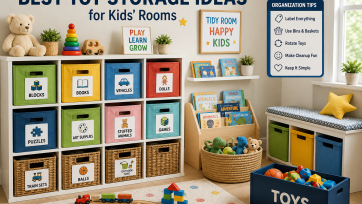
Best Toy Storage Ideas for Kids' Rooms in 2026 A child's playroom can quickly become cluttered with building blocks, dolls, puzzles, stuffed animals, board games, remote control cars, art supplies, and countless other toys. No matter how carefully parents organise everything, toys often end up scattered across the floor by the end of the day. A well-designed toy storage system not only keeps the room tidy but also teaches children responsibility, independence, and organisational skills. The best toy storage solutions make cleanup easy, encourage children to return toys to their proper places, and help families make better use of available space. Whether you have a dedicated playroom or simply a corner of the living room for toys, the right storage ideas can transform a messy area into an organised and inviting space. This guide explores the best toy storage ideas for kids' rooms in 2026 and shares practical tips for creating a clutter-free play environment. Why Toy Storage Matters An organised play area offers much more than a cleaner home. When toys are stored properly, children can: Find their favourite toys easily Focus on one activity at a time Learn responsibility Protect toys from damage Develop good organisation habits Enjoy a calmer play environment Parents also spend less time cleaning and searching for missing toy pieces. Benefits of an Organised Toy Room Good toy storage supports both children and parents. Some of the biggest benefits include: Less clutter Faster cleanup Longer toy lifespan Better concentration Easier toy rotation More floor space Improved safety Reduced stress Children are often more willing to play creatively when they can easily see and access their toys. Toy Storage Bins Storage bins remain one of the most practical solutions for organizing toys. They work well for storing: Building blocks Action figures Dolls Toy cars Art supplies Stuffed animals Clear storage bins are especially useful because children can easily see what's inside without opening every container. Cube Storage Shelves Cube shelving units have become a favorite choice for modern playrooms. Each compartment can hold different categories of toys, making it easy to organize everything neatly. For example: Books Puzzles Board games Wooden toys STEM kits Craft supplies Fabric baskets placed inside cube shelves also create a clean and attractive appearance. Label Everything Simple labels help children learn where each toy belongs. Depending on your child's age, labels can include: Pictures Words Colors Symbols Picture labels are especially helpful for toddlers who cannot read yet. Labeling also makes cleanup much faster. Rotate Toys Regularly Instead of displaying every toy at once, consider using a toy rotation system. Store some toys out of sight and rotate them every few weeks. Benefits include: Less clutter Greater excitement Longer attention spans Better appreciation of existing toys Toy rotation also reduces the temptation to constantly buy new toys. Wall Shelves Save Space Wall-mounted shelves make excellent use of vertical space. They work particularly well for: Books Decorative toys Collectibles Educational materials Small storage baskets Installing shelves higher on the wall also keeps delicate items out of reach of younger children. Toy Chests Toy chests remain a classic storage solution. Modern versions often include: Soft-close lids Safety hinges Large storage capacity Child-friendly designs They are ideal for storing bulky toys such as stuffed animals, sports equipment, and dress-up costumes. Under-Bed Storage The space under a child's bed is often unused. Low-profile storage containers are perfect for: Seasonal toys Board games Extra puzzles Art supplies Toy rotation bins This solution keeps toys accessible without taking up valuable floor space. Bookshelves for More Than Books Children's bookshelves can also organize: Educational games Small toy sets Wooden puzzles Craft boxes Activity kits Displaying toys neatly often encourages children to choose one activity at a time. Storage for Small Toy Pieces Many toys include dozens of small accessories. Use small containers or divided organizers for: Building bricks Puzzle pieces Doll accessories Toy tools Game cards Keeping small parts separated helps prevent lost pieces. Organizing Toys by Category Sorting toys into categories makes cleanup easier. Examples include: Building toys Vehicles Plush toys Outdoor toys Art supplies Educational games Board games RC toys Children quickly learn where each toy belongs when categories remain consistent. Make Cleanup Fun Young children respond well when cleaning becomes a game. Try: Cleanup races Color sorting challenges Music during cleanup Reward charts Family cleanup time Positive routines encourage children to develop lasting organizational habits. Choosing Safe Storage Furniture Safety should always come first. Choose storage furniture that: Has rounded edges Is securely attached to the wall if necessary Includes child-safe hinges Uses non-toxic materials Matches your child's height Stable furniture reduces the risk of accidents during play. Common Toy Storage Mistakes Parents sometimes create storage systems that are difficult for children to use. Avoid: Overfilled bins Heavy containers Unlabeled storage Shelves that are too high Keeping broken toys Simple systems are easier for children to maintain independently. Declutter Regularly Children eventually outgrow many toys. Every few months, sort toys into categories: Keep Donate Recycle Store Removing unused toys creates more space for favorites while making organization much easier. Frequently Asked Questions What is the best way to organize kids' toys? Group toys into categories, use labeled storage bins, rotate toys regularly, and choose furniture that children can access independently. How can I keep my child's room tidy? Create simple storage systems, limit the number of toys available at one time, and encourage daily cleanup routines. Should toys be stored in bins or on shelves? A combination works best. Shelves display frequently used toys, while bins are perfect for storing smaller items and toy collections. How often should I declutter toys? Most families benefit from reviewing toys every three to six months to remove broken, unused, or outgrown items. Final Thoughts The best toy storage ideas for kids' rooms in 2026 focus on simplicity, accessibility, and organization. With labeled bins, cube shelves, toy rotation, and child-friendly storage furniture, families can create a play space that stays tidy without constant effort. An organized room doesn't just look better—it helps children play more creatively, take responsibility for their belongings, and enjoy a calmer environment. By choosing practical storage solutions and maintaining a simple organization system, parents can spend less time cleaning and more time making memories with their children.
Best Electronic Learning Toys for Toddlers: Parent Buying Guide
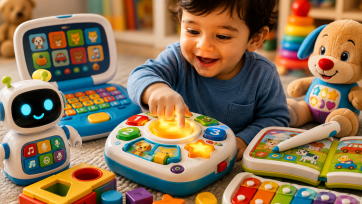
Electronic learning toys are everywhere. They talk, sing, flash, count, ask questions, play music, and promise to teach toddlers letters, numbers, colors, words, and even foreign languages. Some of these toys can be useful. Others are little more than noisy plastic with a speaker. For parents, the challenge is not finding an electronic toy. It is finding one that actually supports learning without overstimulating the child, breaking after a few weeks, or turning playtime into passive screen time. This guide explains which electronic learning toys are best for toddlers, what features matter, what parents should avoid, and how to decide whether an expensive “smart” toy is really worth the money. First: What Should a Toddler Learn From a Toy? Toddlers learn best through movement, repetition, imitation, conversation, and hands-on exploration. At this age, the goal is not formal education. A two-year-old does not need to complete quizzes or memorize dozens of facts. A useful learning toy should support simple skills such as: Recognizing sounds Learning new words Matching shapes Identifying colors Counting small groups Following basic instructions Pressing, turning, pulling, and moving Copying songs and actions Developing hand-eye coordination Understanding cause and effect Electronic features should support these skills, not replace active play. The Best Electronic Toys Keep Children Involved A good electronic toy requires the child to do something. The toddler may need to press the correct button, place a shape in a slot, turn a page, match a picture, dance to a song, or answer a simple question. A weak electronic toy does everything by itself. It flashes, sings, talks, and performs while the child watches. That may hold attention for a few minutes, but attention is not the same as learning. The best products combine sound and light with physical interaction. Talking Books and Electronic Reading Pens Talking books are among the most useful electronic learning toys for toddlers. A child touches a picture, word, letter, or character and hears a corresponding sound. Depending on the product, the book may teach: Animal sounds Everyday vocabulary Numbers Letters Colors Songs Short stories Basic questions Electronic reading pens can also work with several compatible books. This may be a better long-term purchase than a single talking book, but parents should check the price of additional book sets. What to look for Choose a product with clear speech, durable pages, simple controls, and adjustable volume. Avoid books that speak too quickly or include so many sounds that the child cannot focus on the words. The toy should still feel like a book, not a collection of random buttons. Interactive Alphabet Toys Alphabet toys can help toddlers become familiar with letters and sounds. These products may include: Letter buttons Magnetic letters Alphabet boards Talking wall charts Phonics tablets Letter-matching games For toddlers, letter exposure should remain playful. The toy may say the letter name, produce its sound, or connect it with a familiar word. For example: B for ball C for cat D for dog Parents should not expect a toy to teach reading independently. The greatest benefit comes when an adult repeats the sound, names objects, and encourages the child to respond. Electronic Number and Counting Toys Counting toys can help children connect number words with physical quantities. A toddler may press the number three and hear the toy count three objects. Another toy may ask the child to place three pieces into a container. The strongest number toys combine electronic feedback with real objects. Look for toys that teach: Counting from one to ten Number recognition More and less Simple matching Basic shapes Simple patterns Avoid products that move too quickly into written addition or subtraction before the child understands basic quantities. Musical Learning Toys Music can support language, rhythm, memory, movement, and coordination. Electronic musical toys may include: Small keyboards Musical mats Singing microphones Toy drums Sound panels Dancing toys Action-song players The best musical toy encourages the child to participate. A toddler may clap, dance, copy a rhythm, sing a repeated word, or press keys to create different sounds. Parents should check the volume before purchasing. Some toys are surprisingly loud even at the lowest setting. A useful product should have a clear volume control or a physical switch. Electronic Shape Sorters Traditional shape sorters are already valuable learning toys. Electronic versions add sounds, music, or spoken feedback. For example, the toy may name the shape when the child places it into the correct opening. This can reinforce: Shape recognition Color identification Fine motor skills Problem-solving Cause and effect The electronic feature should remain secondary. If the toy becomes useless when the batteries run out, it may not provide good value. A strong electronic shape sorter should still work as a normal hands-on toy without power. Activity Tables Electronic activity tables are popular for babies and young toddlers. They often include buttons, gears, lights, songs, sliders, spinning pieces, and detachable parts. These tables can encourage standing, reaching, pressing, twisting, and moving around the toy. However, more features do not always mean better learning. A crowded activity table with constant noise may overwhelm some children. Look for a table with clearly separated activities and several manual features that work without sound. It should also be stable enough that the child cannot easily pull it over. Toy Laptops and Learning Tablets Toy laptops and child learning tablets usually include letters, numbers, music, simple games, and quizzes. They may appeal to toddlers because they resemble adult devices. However, these toys vary greatly in quality. Some have tiny screens, unclear voices, confusing menus, and poor buttons. Others offer simple, age-appropriate activities. Before buying, check: Screen size Sound quality Button size Difficulty level Number of useful activities Whether the toy requires internet access Whether content can be updated Whether the screen is too bright Whether advertisements are included For very young toddlers, physical buttons and simple tasks are usually more appropriate than complicated menus. Interactive Plush Toys Talking animals and dolls can sing songs, tell stories, ask questions, or respond when touched. These toys can encourage pretend play and emotional interaction. Some plush toys teach body parts, bedtime routines, words, or songs. Parents should carefully consider connected plush toys that contain microphones or require an online account. A simple talking toy with pre-recorded phrases may be more suitable for a toddler than a cloud-connected toy that stores voice data. Washability is another major issue. Check whether the electronic unit can be removed before cleaning. Learning Remote Controls and Toy Phones Toddlers are often fascinated by remote controls and smartphones. Toy versions can redirect that interest toward a safer object. These toys usually include large buttons, lights, sounds, numbers, and pretend conversations. They can support: Number recognition Pretend play Fine motor skills Vocabulary Cause and effect However, parents should avoid toys that encourage constant button pressing without meaningful interaction. A better toy phone may include simple role-play prompts, songs, and recognizable everyday sounds. Bilingual Electronic Toys Many electronic learning toys advertise bilingual learning. These products may name colors, animals, numbers, or objects in two languages. They can provide useful exposure, especially when the family already uses both languages. But a toy alone will not make a toddler bilingual. Language learning requires regular conversation, listening, repetition, and meaningful interaction with people. Before buying, listen to the pronunciation if possible. Poor-quality audio or unnatural translation reduces the educational value. Electronic Toys by Age For 12 to 18 Months Choose simple toys with large buttons, music, lights, and basic cause-and-effect activities. Good options include: Musical activity centers Talking animal toys Large-button sound books Stable activity tables Simple shape sorters Push-and-play toys At this age, avoid complicated instructions and small detachable pieces. For 18 to 24 Months Toddlers may begin matching pictures, copying words, identifying familiar objects, and following simple prompts. Suitable toys include: Talking books Number buttons Interactive puzzles Musical instruments Basic alphabet toys Pretend phones Simple learning tablets The child should not need to navigate several menus to begin playing. For Ages 2 to 3 Children may be ready for simple questions, matching games, songs with actions, and beginner language activities. Useful options include: Electronic reading pens Bilingual word toys Interactive maps Toy laptops Talking puzzles Musical mats Simple memory games Choose toys that allow the child to succeed without constant adult correction. Features Worth Paying For Some features genuinely improve usability. Adjustable Volume This is essential. Parents should be able to reduce the sound without covering the speaker with tape. Clear Voice Quality Words should sound natural and easy to understand. Poor audio can confuse children who are still learning pronunciation. Durable Buttons Toddlers press hard, drop toys, and repeat the same action many times. Buttons should respond reliably. Automatic Shutoff This saves battery power when the toy is left unused. Multiple Difficulty Levels A toy that grows with the child may provide better value. Offline Functionality For toddlers, internet access is usually unnecessary. Offline toys are often simpler, safer, and easier to use. Replaceable or Rechargeable Batteries Check the long-term cost. A toy that consumes disposable batteries quickly may become expensive. Features That Often Add Cost Without Much Value Parents should be cautious about paying extra for: Wi-Fi connectivity Voice assistants Camera features Facial recognition Complex mobile applications Subscription-only lessons Large numbers of repetitive songs Artificial intelligence claims Progress tracking for very young children A toddler does not need detailed performance analytics. Parents can usually understand the child’s progress by playing alongside them. The Noise Problem Electronic toys are often designed to attract attention in busy stores. That means they may use loud music, flashing lights, repeated phrases, and rapid sound effects. At home, the same features can become irritating or overwhelming. Some toddlers may become frustrated when too many sounds play at once. Before buying, ask: Can the volume be lowered? Can music be turned off? Can the lights be disabled? Does the toy repeat sounds constantly? Does it continue talking without interaction? A quieter toy is not necessarily less educational. In many cases, it allows the child to concentrate better. Safety Checks Before Buying Parents should inspect electronic learning toys carefully. Check for: Secure battery compartments Screws over button batteries No loose wires No sharp plastic edges No damaged charging ports No easily detached small pieces No loose magnets Strong speaker covers Safe charging instructions Age-appropriate materials Button batteries are especially dangerous if swallowed. A battery compartment should require a tool to open. Do not continue using a toy if the battery area becomes hot, damaged, swollen, or wet. Battery-Operated vs Rechargeable Toys Battery-operated toys are often cheaper initially, but replacement batteries increase the long-term cost. Rechargeable toys may be more convenient, but charging safety matters. Disposable batteries Advantages: Easy to replace No waiting for charging Toy can be stored for long periods Disadvantages: Ongoing cost Battery waste Risk of leakage Frequent replacement Rechargeable batteries Advantages: Lower long-term cost Convenient for regular use Less battery waste Disadvantages: Charging time Battery may weaken over time Replacement may be difficult Damaged lithium batteries can be dangerous Parents should supervise charging and use the recommended cable. Should Toddlers Use App-Connected Toys? Most toddlers do not need app-connected toys. An application may offer extra songs, updates, or parent controls, but it may also introduce: Account registration Data collection Advertising Device compatibility problems Subscription fees Internet dependence More screen time If an app is required, parents should install and test it before giving the toy to the child. Do not provide unnecessary personal information. Check what permissions the app requests and whether the toy remains useful without the connection. Are Electronic Learning Toys Better Than Traditional Toys? Not necessarily. Electronic toys can provide immediate feedback, sounds, pronunciation, songs, and guided activities. Traditional toys often provide more imagination, flexibility, conversation, and physical exploration. A balanced toy collection may include both. For example: An electronic alphabet book for sound recognition Blocks for building Dolls for pretend play Puzzles for problem-solving Art supplies for creativity Balls for physical movement Books for shared reading The problem begins when electronic toys replace every other form of play. Common Buying Mistakes Buying Too Advanced Parents may choose a toy intended for older children because it appears to offer more learning. In reality, a complicated toy may frustrate a toddler and remain unused. Choosing Based on the Number of Features A toy with 100 songs is not automatically better than one with 10 well-designed activities. Ignoring the Sound Always test the volume when possible. Forgetting Battery Costs Check the battery type and expected usage. Assuming “Educational” Means Effective The label is a marketing term. Look at what the child actually does while using the toy. Buying Too Many Talking Toys When every toy talks, sings, flashes, and demands attention, children may struggle to engage deeply with any of them. A Simple Test Before Purchasing Ask these five questions: What skill does this toy support? What will my child physically do with it? Can it be used without batteries? Is the sound adjustable? Will it still be useful in six months? If the answers are unclear, the toy may not be worth the price. Final Recommendation The best electronic learning toys for toddlers are simple, durable, age-appropriate, and interactive. Talking books, musical instruments, number toys, shape sorters, activity tables, and basic learning tablets can all be useful when they encourage the child to respond and participate. Parents should avoid toys that rely on nonstop noise, flashing lights, complicated apps, hidden subscriptions, or unnecessary data collection. Electronic features should make play more meaningful—not more distracting. For toddlers, the smartest toy is rarely the one with the most technology. It is the one that gives the child a reason to touch, listen, think, speak, move, and play again.
Best Dollhouses for Kids in 2026
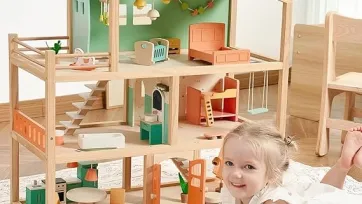
Best Dollhouses for Kids in 2026: A Complete Parent's Buying Guide A dollhouse is much more than a toy. It's a miniature world where children become storytellers, designers, and problem-solvers. Every room they decorate, every character they create, and every adventure they imagine helps develop creativity, communication, and emotional intelligence. Whether it's a cosy family home, a modern villa, or a magical castle, dollhouses inspire endless hours of imaginative play. In 2026, dollhouses are available in more styles and sizes than ever before. Parents can choose from traditional wooden dollhouses, portable playsets, modern multi-storey homes, eco-friendly designs, and interactive models with realistic lights and sounds. With so many options available, finding the right dollhouse can feel overwhelming. This guide explains everything you need to know about choosing the best dollhouses for kids in 2026. Why Dollhouses Are So Popular Children naturally enjoy creating stories. A dollhouse allows them to invent daily routines, exciting adventures, family celebrations, and imaginative worlds where every room becomes part of a unique story. Unlike many electronic toys, dollhouses encourage open-ended play, meaning children create new experiences every time they play. Benefits of Dollhouses Dollhouses help children develop a wide variety of important skills. Some of the biggest benefits include: Encourage imaginative play Improve storytelling skills Build communication Develop emotional intelligence Strengthen fine motor skills Encourage creativity Improve social interaction Build confidence Reduce screen time Children also practise organising spaces and solving everyday problems through role play. Wooden Dollhouses Wooden dollhouses remain one of the most popular choices for families. Parents appreciate them because they are: Durable Environmentally friendly Beautifully designed Long-lasting Easy to maintain Their timeless appearance means they often become treasured family toys passed down through generations. Modern Dollhouses Modern dollhouses feature stylish interiors inspired by contemporary homes. Many include: Multiple floors Balconies Garages Home offices Swimming pools Rooftop terraces These realistic designs encourage children to recreate everyday family life in imaginative ways. Portable Dollhouses Portable dollhouses are ideal for travel and smaller homes. They usually feature: Folding designs Carry handles Built-in storage Lightweight construction Children can easily take them to grandparents' houses, holidays, or playdates. Dollhouse Furniture Sets Furniture brings every dollhouse to life. Popular accessories include: Beds Sofas Dining tables Kitchen units Bathrooms Garden furniture Adding new furniture allows children to redesign rooms and create fresh stories whenever they like. Dollhouse Family Figures Characters are the heart of every dollhouse adventure. Many sets include: Parents Children Grandparents Babies Pets Additional figures such as doctors, teachers, builders, and firefighters help expand imaginative storytelling even further. Educational Value of Dollhouses Dollhouses naturally encourage learning through everyday role play. Children practise: Communication Problem-solving Sharing Responsibility Creativity Organisation Many parents notice that dollhouse play helps children express emotions and better understand daily life. Dollhouses Encourage Social Play Playing with siblings or friends teaches valuable social skills. Children learn how to: Share toys Take turns Cooperate Solve disagreements Build stories together Collaborative storytelling often leads to longer and more engaging play sessions. Choosing the Right Dollhouse Before buying, consider: Your child's age Available space Material quality Number of rooms Furniture included Safety certifications Future expansion options A slightly larger dollhouse often offers greater long-term value as children grow. Safety Tips Choose dollhouses that: Meet recognised safety standards Have smooth edges Use non-toxic paints Include sturdy construction Match the recommended age For younger children, avoid very small accessories that could present a choking hazard. Common Buying Mistakes Many parents focus only on appearance. Avoid: Fragile plastic construction Sharp edges Poor-quality furniture Difficult assembly Limited play space Dollhouses that are too small for growing children Choosing a durable model usually provides many years of imaginative play. Why Dollhouses Make Wonderful Gifts Dollhouses remain one of the most memorable gifts a child can receive. They're perfect for: Birthdays Christmas Special achievements Family celebrations Unlike many toys that lose their appeal quickly, dollhouses continue inspiring new stories and adventures throughout childhood. Frequently Asked Questions What is the best dollhouse for children? The best dollhouse depends on your child's age and available space. Wooden dollhouses with multiple rooms and durable furniture are among the most popular choices. At what age can children start playing with dollhouses? Simple dollhouses with large accessories are suitable from around three years old, while more detailed models are ideal for older children. Do dollhouses help child development? Yes. Dollhouses improve creativity, communication, emotional understanding, storytelling, social skills, and fine motor development. Are wooden dollhouses better than plastic ones? Wooden dollhouses are generally more durable, environmentally friendly, and longer lasting, while plastic models often include more interactive features. Final Thoughts The best dollhouses for kids in 2026 offer far more than beautiful miniature homes. They inspire imagination, encourage storytelling, and help children develop valuable life skills through creative role play. Whether it's decorating rooms, organising family routines, or inventing exciting adventures, every moment spent with a dollhouse supports healthy emotional and cognitive development. By choosing a high-quality dollhouse with durable construction and plenty of opportunities for imaginative play, parents can provide a timeless toy that children will enjoy for many years to come.
Best Coding Robots for Kids: Reviews and Comparison
Coding robots have become some of the most popular educational toys for children. They combine technology, problem-solving, engineering, and creativity in a way that feels more like play than study. The best coding robots for kids can introduce important concepts such as sequencing, commands, loops, patterns, debugging, logic, and basic programming. Some coding robots work without screens, while others connect to a tablet, smartphone, or computer. However, coding robots vary significantly in price, difficulty, features, and age suitability. A robot designed for a preschooler may use colorful buttons and direction cards, while a robot for an older child may support advanced coding languages, sensors, artificial intelligence, or custom building projects. This guide compares the main types of coding robots and explains how parents can choose the best option for their child. What Is a Coding Robot? A coding robot is an educational toy that responds to programmed instructions. A child may tell the robot to: Move forward Turn left or right Follow a path Detect an obstacle Produce sounds Change lights Pick up objects Complete a challenge Beginner coding robots often use buttons, cards, tiles, or physical blocks. Advanced models may use visual block-based coding or text-based programming. The main purpose is not simply to make the robot move. The child must think about the correct order of commands, test the program, identify errors, and improve the instructions. This process introduces computational thinking in an age-appropriate way. Best Screen-Free Coding Robots for Young Children Screen-free coding robots are ideal for parents who want to introduce programming concepts without increasing tablet or smartphone use. These robots usually use large buttons, coding cards, or physical command tiles. Why Screen-Free Robots Are Useful Screen-free robots can help younger children understand: Directions Sequencing Cause and effect Problem-solving Spatial awareness Pattern recognition A child may press commands such as forward, forward, left, and go. The robot then follows the sequence. If the robot reaches the wrong location, the child must identify which command caused the problem. This is an early form of debugging. Best Age Range Most screen-free coding robots are suitable for children between three and seven years old. Parents should still check the specific manufacturer’s age recommendation. Advantages No smartphone or tablet required Easy for beginners Encourages hands-on learning Usually simple to set up Suitable for classrooms and home use Disadvantages Limited advanced programming Children may outgrow basic models Some robots require additional activity sets Best Coding Robots for Ages 5 to 7 Children between five and seven years old are often ready for coding robots that combine physical controls with simple visual programming. The best models for this age group usually offer guided challenges and multiple difficulty levels. Features to Look For Parents should look for: Large, simple controls Clear instructions Durable construction Rechargeable battery Screen-free or optional app use Beginner coding challenges Obstacle courses or activity maps A robot that offers both button-based programming and optional app-based activities may provide better long-term value. Suitable Activities Children can program the robot to: Travel through a maze Reach a specific destination Avoid obstacles Deliver an object Follow a colored path Draw simple shapes These activities make coding more understandable because children can immediately see the result of each command. Best Coding Robots for Ages 8 to 10 Children aged eight to ten may be ready for coding robots with sensors, mobile applications, building components, and more advanced challenges. Many robots in this category use block-based coding. Instead of typing difficult programming commands, children drag and connect visual blocks on a screen. Important Features A good coding robot for this age group may include: Distance sensors Light sensors Sound detection Programmable lights Motors Obstacle avoidance Drawing attachments Custom movement controls Some models also allow children to build different robot shapes or attach construction blocks. Educational Benefits These robots can help children understand: Conditional logic Loops Events Variables Sensor input Motor control Engineering design For example, a child may program the robot to turn whenever a sensor detects an obstacle. This introduces the idea that a program can respond to changing conditions. Best Coding Robots for Ages 11 and Older Older children may benefit from advanced robotics kits that support more complex programming and engineering projects. These kits often require assembly and may include several motors, sensors, wires, and programmable components. Advanced Coding Options Some advanced coding robots support: Scratch-style coding Python JavaScript Arduino programming App development Artificial intelligence projects Parents should not assume that every older child is ready for advanced coding. The best choice depends on the child’s previous experience and interest. A complete beginner may still benefit from a visual coding platform before moving to text-based programming. Coding Robot Comparison The following comparison can help parents choose the right category. Screen-Free Coding Robots Best for: Preschoolers and beginnersTypical age: 3 to 7 yearsControls: Buttons, cards, or tilesDevice required: Usually noMain benefit: Simple introduction to sequencingPossible limitation: Limited long-term difficulty App-Based Coding Robots Best for: Early elementary and middle-grade childrenTypical age: 6 to 12 yearsControls: Tablet or smartphone applicationDevice required: YesMain benefit: More activities and programming optionsPossible limitation: Increased screen time and device compatibility issues Buildable Robotics Kits Best for: Children who enjoy construction and engineeringTypical age: 8 years and olderControls: App, computer, or programmable controllerDevice required: Often yesMain benefit: Combines coding and mechanical designPossible limitation: More expensive and complicated Advanced Programmable Robots Best for: Experienced children and teenagersTypical age: 11 years and olderControls: Computer programmingDevice required: Usually yesMain benefit: Supports advanced coding languagesPossible limitation: Steeper learning curve How to Choose the Best Coding Robot for Kids Before purchasing a coding robot, parents should compare more than appearance and price. 1. Check the Recommended Age A coding robot that is too advanced may frustrate a young child. A very simple robot may quickly become boring for an experienced learner. The recommended age should be treated as a starting point. Parents should also consider the child’s reading ability, patience, technical experience, and interest. 2. Decide Whether Screen-Free Coding Is Important Some parents prefer screen-free coding toys, especially for preschoolers. Screen-free robots encourage physical interaction and reduce reliance on mobile devices. However, app-based robots may offer more advanced lessons, updates, and customization. The right choice depends on the child’s age and the family’s screen-time rules. 3. Check Device Compatibility Before buying an app-controlled coding robot, confirm that the application works with the devices available at home. Parents should check: Android compatibility iPhone and iPad compatibility Windows or Mac support Bluetooth requirements Operating system version Internet requirements A robot may become difficult to use if the app is no longer supported or does not work with an older device. 4. Look for Multiple Difficulty Levels The best coding robots grow with the child. A robot may begin with simple directional commands and later introduce loops, conditions, variables, sensors, and advanced programming. Multiple difficulty levels can make a more expensive robot better value over time. 5. Compare Battery Options Some coding robots use disposable batteries, while others include rechargeable batteries. Parents should consider: Battery life Charging time Replacement battery cost Charging cable type Whether batteries are included A robot with poor battery life can interrupt learning and increase long-term costs. 6. Check for Subscription Fees Some coding toys require paid subscriptions to access additional lessons, games, or advanced features. Before purchasing, check whether the advertised activities are included or require a monthly or annual payment. Parents should calculate the total cost of ownership rather than looking only at the initial purchase price. 7. Consider Durability Coding robots are often pushed, dropped, turned, and used on different surfaces. A durable robot should have: Strong wheels Secure battery covers Reliable buttons Protected sensors Good-quality plastic Easily available replacement parts Customer reviews can help identify common durability problems. 8. Check the Learning Support A good coding robot should include clear instructions, tutorials, activity cards, or guided projects. Some children may lose interest if they do not know what to build or program. Structured challenges can help beginners develop confidence before creating their own projects. Are Coding Robots Worth the Money? Coding robots can be worth the cost when they match the child’s age and provide enough activities to remain useful over time. A coding robot may be a good investment if it: Teaches real programming concepts Offers multiple difficulty levels Encourages creative projects Works reliably with available devices Includes strong educational support Does not require expensive subscriptions Can be used by more than one child However, parents should avoid buying a coding robot only because it looks impressive. Some products offer very limited activities and become ordinary remote-control toys after the initial excitement disappears. The educational value depends on whether the child is actually making decisions, creating instructions, solving problems, and correcting mistakes. Coding Robots vs Regular Remote-Control Toys A remote-control toy responds directly when the child presses a button. A coding robot follows a planned sequence of commands. This difference is important. With a remote-control car, the child may press forward and immediately watch it move. With a coding robot, the child may need to plan the entire route before the robot begins. Coding robots therefore involve more prediction, sequencing, and problem-solving. That does not mean remote-control toys have no value. They can support coordination and spatial awareness. However, a true coding robot should allow the child to create and test a program. Safety Tips for Coding Robots Parents should supervise younger children and inspect the robot regularly. Important safety considerations include: Secure battery compartments No exposed wires No loose small parts No damaged rechargeable batteries Age-appropriate magnets Safe charging practices Reliable privacy settings in connected apps Parents should also review the privacy policy of any app that collects information, requires an account, or connects to the internet. Avoid sharing unnecessary personal information when creating a child’s account. Final Verdict The best coding robot for kids depends on age, experience, budget, and learning goals. For preschoolers and young beginners, screen-free robots with buttons, cards, or command tiles are usually the best choice. Children between six and ten may benefit from app-controlled robots with visual block coding, sensors, and guided activities. Older children and teenagers may enjoy buildable robotics kits that support Python, electronics, and advanced engineering projects. Parents should compare device compatibility, battery life, subscription costs, durability, and available learning activities before purchasing. A good coding robot should not simply entertain a child. It should encourage the child to plan, experiment, identify mistakes, and improve a solution. When chosen carefully, coding robots can make computer science more accessible and turn complex programming ideas into enjoyable, hands-on play.