The Hidden Cost of Too Many Toys: Why Less Can Lead to Happier, More Creative Children
Introduction
On a Saturday morning, Emma's parents decided to tidy her bedroom.
There were dolls under the bed, building blocks mixed with toy dinosaurs, puzzles missing pieces and a basket overflowing with stuffed animals. By the time everything had been organised, one question remained.
"With all these toys… why does she always say she's bored?"
It's a question thousands of parents quietly ask themselves.
We've been taught to believe that more toys equal more happiness. Birthdays bring new presents. Christmas doubles the collection. Relatives arrive with another surprise, and before long, the playroom looks more like a toy shop than a place to play.
Yet something unexpected often happens.
The more choices children have, the less deeply they play.
Instead of spending an hour building an imaginary city, they move from one toy to another every few minutes. Nothing seems to hold their attention for long.
Child development experts have been discussing this issue for years. Many now believe the problem isn't that children have too few toys—it's that they have too many.
If you've ever looked around your home and wondered whether your child really needs another toy, this guide is for you.
When More Choice Becomes a Problem
Adults usually enjoy having options.
Children are different.
Imagine walking into a room containing two hundred toys.
Where do you begin?
Some children become excited. Others become overwhelmed. Instead of choosing one activity and becoming absorbed in it, they spend their time deciding what to play with.
Ironically, having fewer toys often makes that decision easier.
Parents are sometimes surprised to discover that removing half the toys doesn't reduce playtime. In many homes, it actually improves it.
A Toy Doesn't Need to Be New to Feel Exciting
Think about the last time you cleaned a cupboard and found something you'd forgotten about.
It suddenly felt interesting again.
Children experience exactly the same feeling.
A toy hidden away for six weeks often feels almost brand new when it returns.
That's one reason many families now rotate toys instead of keeping every single item available all year.
The toy itself hasn't changed.
The child's relationship with it has.
Why Boredom Isn't Always Bad
Most parents instinctively try to solve boredom as quickly as possible.
But boredom has an interesting side effect.
It pushes children to invent.
A child with nothing obvious to do might turn sofa cushions into a castle, build an airport from cardboard boxes or transform a blanket into a superhero cape.
Those ideas rarely appear when every second is filled with ready-made entertainment.
Sometimes boredom is simply imagination waiting for permission.
The Toys Children Return to Again and Again
Watch children over several months and you'll notice a pattern.
Some toys quietly disappear.
Others never seem to leave the floor.
They aren't always the newest or most expensive ones.
They're usually the toys that allow children to make the rules.
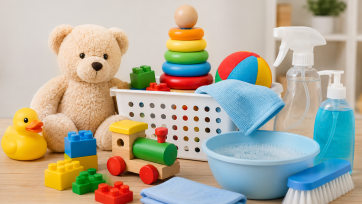
Building bricks become skyscrapers one day and pirate ships the next.
Wooden figures move effortlessly from farms to jungles to imaginary kingdoms.
Art supplies never ask children to colour inside the lines.
The common thread isn't technology.
It's freedom.
The best toys leave room for children to finish the story.
The Experiment Every Parent Should Try
You don't need to throw away half the toys in your home to see a difference.
Instead, try a simple experiment.
Choose around two-thirds of your child's toys and store them out of sight for three or four weeks. Leave behind a balanced selection—perhaps some building toys, books, art supplies, pretend play items and a few favourite comfort toys.
Then do nothing.
Don't suggest games.
Don't replace the missing toys.
Just watch.
Many parents are surprised by what happens next. Children often begin playing for longer, inventing richer stories and combining toys in ways they hadn't before. With fewer distractions, they stop hopping from one activity to another and become fully absorbed in what they're doing.
A Playroom Doesn't Have to Look Full
Scroll through social media and you'll find beautifully organised playrooms filled with shelves of colourful toys.
They look impressive.
But appearances can be misleading.
A room packed with toys isn't necessarily a room filled with play.
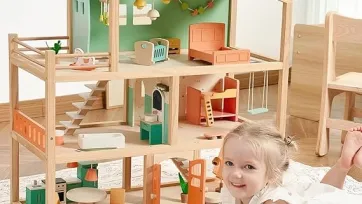
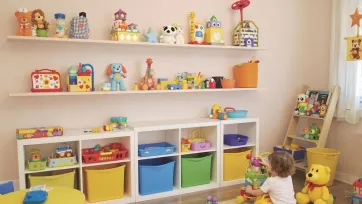
Some of the happiest, most creative play spaces are surprisingly simple. A small bookshelf, a basket of building blocks, a few puzzles, some art materials and an area where children have enough space to spread out and create.
Children need room to imagine just as much as they need toys.
Sometimes the empty floor is more valuable than another shelf.
Signs Your Child May Have Too Many Toys
Every child is different, but certain behaviours often suggest that the toy collection has become overwhelming.
You might notice that your child:
-
Starts one activity but abandons it within minutes.
-
Constantly asks for something new despite owning plenty.
-
Struggles to tidy their room because there is simply too much to organise.
-
Says they're bored while surrounded by toys.
-
Rarely returns to older favourites.
None of these signs mean you've done anything wrong. They simply suggest it may be time to simplify the environment.
It's Not About Owning Less. It's About Playing More.
Minimalism isn't the goal.
Meaningful play is.
If your child has fifty toys they genuinely enjoy and use regularly, that's perfectly fine.
The problem begins when toys become background noise—objects that fill shelves without adding anything to play.
Before buying something new, ask yourself one question:
"Will this add something different, or will it simply add more?"
That single question can prevent many impulse purchases.
How to Declutter Without Tears
One concern many parents have is upsetting their child by removing toys.
The good news is that decluttering doesn't need to feel like taking something away.
A gentle approach works far better.
Start with toys your child has clearly outgrown or ignored for months.
Store them in a box rather than donating them immediately. If your child doesn't ask for them after several weeks, it's usually a good sign they won't be missed.
When you do donate toys, involving children in the process can be a valuable lesson in kindness and generosity. Explain that another child may enjoy the toy just as much as they once did.
Buying Better Instead of Buying More
The next time you're tempted to buy another toy, pause for a moment.
Instead of asking, "Will my child like this?", ask a few different questions.
-
Will it encourage creativity?
-
Can it be played with in more than one way?
-
Will it still be interesting next year?
-
Does it add something new to our existing collection?
-
Is there enough room for it?
Parents often discover that buying fewer but better-quality toys creates a richer play experience than constantly adding new ones.
Frequently Asked Questions
Do children really play better with fewer toys?
Many parents and educators find that children often concentrate for longer and play more creatively when they have fewer, carefully chosen toys available. A smaller selection can reduce distractions and encourage deeper engagement.
What is toy rotation?
Toy rotation is the practice of keeping only a portion of toys available while storing the rest. Every few weeks, the stored toys are swapped with the ones currently in use, making familiar toys feel fresh again.
How many toys should a child have?
There isn't a perfect number. What matters more is variety and quality. A collection that encourages creativity, movement, reading and imaginative play is usually more valuable than simply having lots of toys.
Will my child be upset if I remove toys?
If the process is gradual and thoughtful, many children adapt surprisingly well. Rotating or storing toys first, rather than immediately giving them away, makes the transition much easier.
Is it better to buy experiences instead of toys?
In many cases, yes. Days out, craft sessions, museum visits or family activities can create lasting memories and complement a smaller, more meaningful toy collection.
Final Thoughts
It's easy to believe that giving children more toys means giving them a better childhood.
In reality, childhood isn't measured by how full the toy box is.
It's measured by the adventures children create, the stories they invent and the memories they make while playing.
Sometimes the greatest gift isn't another toy at all. It's the space to enjoy the ones they already have.
A carefully chosen collection of toys—combined with time, imagination and freedom—often provides far more happiness than shelves overflowing with forgotten purchases.
So before the next birthday, holiday or shopping trip, take a look at what your child already owns.
You may discover that what they need isn't more toys.
They simply need more opportunities to truly play.