The Toy Box Challenge: What Happens When a Child Plays With Just Five Toys for a Week?
Introduction
What would happen if you quietly removed almost every toy from your child's bedroom tonight?
Not forever.
Just for one week.
It sounds like the sort of idea that would end in complaints, boredom and endless requests for the television. Most parents assume fewer toys must mean less fun.
But families who have tried this simple experiment often describe something completely different.
The first day can be a little strange. Children look around, searching for the usual pile of choices. By the second or third day, something unexpected begins to happen. Instead of asking, "What should I play with?", they start asking, "What can I make?"
A train becomes part of a zoo.
A teddy bear opens a bakery.
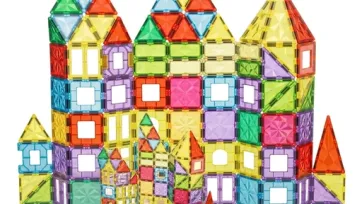
Building blocks become a bridge, then a castle, then a hospital before lunch.
Nothing new has entered the room.
The only thing that's changed is the amount of choice.
Psychologists sometimes refer to this as choice overload. Adults experience it when scrolling endlessly through films without deciding what to watch. Children can experience something similar when surrounded by too many toys competing for attention.
This article isn't about convincing you to throw away half your child's belongings.
It's about exploring a surprisingly simple experiment that has helped many families rediscover the joy of imaginative play.
Why More Options Don't Always Create Better Play
Imagine walking into an ice cream shop that sells five flavours.
Choosing is easy.
Now imagine another shop offering two hundred flavours.
Suddenly the decision feels harder.
Children experience a similar dilemma with toys.
When every shelf is full and every basket overflows, deciding what to play with becomes an activity in itself.
Instead of becoming absorbed in one game, they move rapidly from toy to toy, searching for the next burst of excitement.
Sometimes, reducing choice is the quickest way to improve concentration.
The Five-Toy Rule
There isn't a perfect number, but five different types of toys often create a surprisingly balanced play environment.
For example:
A construction toy.
A pretend-play toy.
A creative activity.
A puzzle or thinking game.
A favourite comfort toy.
Notice that the goal isn't to choose the five most expensive toys.
It's to choose five toys that encourage completely different kinds of play.
That variety matters far more than quantity.
Day One: Curiosity
Children often notice the difference immediately.
Some ask where the missing toys have gone.
Others simply begin exploring what's available.
At this stage, many parents feel tempted to end the experiment.
Don't.
Children are adjusting.
The absence of endless options encourages them to spend longer with each remaining toy.
Day Three: Something Changes
This is where the experiment becomes interesting.
Parents frequently notice that stories become longer.
Games become more detailed.
Instead of abandoning a toy after ten minutes, children begin expanding the same activity throughout the day.
A few blocks become an entire village.
Soft toys receive names, jobs and personalities.
Play starts looking less like entertainment and more like storytelling.
It's difficult to force this kind of creativity.
But it's surprisingly easy to make room for it.
The Surprise Most Parents Mention
Ask families who've tried reducing toys for a short period and one comment appears again and again.
"The house actually became calmer."
There were fewer arguments about tidying.
Less frustration over finding missing pieces.
Fewer interruptions caused by children constantly asking for something different.
The change wasn't dramatic overnight.
It was gradual.
And because it happened naturally, many parents decided to keep the new routine long after the original experiment had ended.
"What If My Child Says They're Bored?"
This is usually the first concern parents raise.
And it's a fair one.
The word bored can sound like a warning sign, as though the experiment has failed before it has even begun.
But boredom isn't always a problem to solve immediately.
Think about how many of the best childhood games begin.
A child stares out of the window.
They pick up a blanket.
A few chairs become a secret hideout.
A cardboard box turns into a racing car.
None of those ideas came from a toy.
They came from a quiet moment when imagination finally had space to take over.
If your child says they're bored during the first day or two, resist the urge to rush in with new entertainment. Give them time. More often than not, they'll create something far more interesting than anything you could have suggested.
How to Try the Challenge Without Causing Drama
The biggest mistake is announcing the experiment like a new household rule.
Instead, make the change quietly.
Pack away most of the toys while your child is asleep or out for the day. Leave a carefully chosen mix behind—enough to inspire different types of play, but not so many that the room still feels crowded.
If your child asks where the other toys have gone, be honest but relaxed.
"They're having a little rest. We'll bring different ones back soon."
There's no need to frame it as a punishment or a lesson. Treat it as something normal.
When the stored toys return a few weeks later, many children greet them with the same excitement they usually reserve for brand-new presents.
What Teachers Notice in Simpler Classrooms
Walk into many nurseries or early-years classrooms and you'll notice something that surprises first-time visitors.
The shelves aren't overflowing.
Teachers don't remove toys because they dislike fun. They do it because too many choices can make meaningful play harder.
Instead, resources are often displayed neatly, with space around them.
Children can see what's available.
They can make a choice.
And once they've chosen, they're more likely to stay focused.
It's a reminder that children don't necessarily need more stimulation. They often need fewer distractions.
A Seven-Day Experiment You Can Try at Home
If you're curious, keep the challenge simple.
Day 1: Choose five different toys and pack the rest away.
Day 2: Watch without interrupting. Resist the urge to suggest games.
Day 3: Take note of how long your child spends with each toy.
Day 4: Join in for a while, but let your child lead the play.
Day 5: Notice whether toys are being combined in new ways.
Day 6: Observe whether tidying up feels easier.
Day 7: Ask your child which toy they've enjoyed most and why.
You may discover that their answer isn't the toy you expected.
This Isn't About Owning Less
Some parents hear ideas like this and assume they need to become minimalists.
That's not the point.
Children don't benefit because they own fewer things.
They benefit because the environment allows them to focus.
If your family enjoys collecting toys, that's perfectly fine. The real question isn't how many toys your child owns.
It's how many they can genuinely enjoy at one time.
There's a big difference.
The Result May Surprise You
At the end of the week, don't judge the experiment by how many toys were used.
Judge it by different questions.
Did your child invent longer stories?
Did they seem less distracted?
Was tidying up easier?
Did they ask for new toys less often?
Even small improvements suggest the challenge was worthwhile.
And if nothing changes, that's useful information too. Every child is different, and every family finds its own rhythm.
Frequently Asked Questions
Is five toys the perfect number?
No. Five is simply an easy starting point. Some children thrive with a few more, while others are happy with even fewer. The principle is to reduce choice, not follow a strict rule.
Will my child miss the toys that are packed away?
Possibly at first. However, many parents find that children quickly adapt, especially when they know the toys will return later through rotation.
Can siblings share the same five toys?
Yes, although it's helpful to include activities that encourage cooperative play as well as toys each child particularly enjoys.
How long should the challenge last?
One week is a good introduction, but many families continue rotating toys every few weeks once they see the benefits.
Does this work for older children?
Yes. While the types of toys change with age, older children can also benefit from a less cluttered play environment and fewer distractions.
Final Thoughts
The Toy Box Challenge isn't really about reducing toys.
It's about increasing opportunities.
Opportunities to imagine.
To concentrate.
To solve problems.
To turn ordinary objects into extraordinary adventures.
Children have an incredible ability to create worlds from very little. Sometimes, without realising it, adults make that harder by giving them too many choices at once.
So before buying another toy, try something different.
Open the toy box.
Take a few toys out.
Pack the rest away for a while.
Then watch what happens.
You may not discover that your child needs more toys.
You may discover they simply needed a little more space to enjoy the ones they already had.