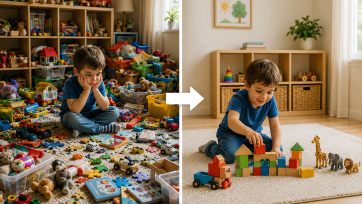
15 Best Educational Toys for Kids That Make Learning Fun

Choosing the best educational toys for kids is not only about keeping children entertained. The right learning toy can support problem-solving, creativity, communication, fine motor skills, early mathematics, and scientific thinking.

However, parents should not assume that every product advertised as an “educational toy” will automatically improve a child’s development. In many cases, simple hands-on toys such as building blocks, puzzles, pretend-play sets, art supplies, and science kits provide more meaningful learning opportunities than toys filled with flashing lights and automated sounds.

The American Academy of Pediatrics emphasizes that toys are most beneficial when they encourage interaction, imagination, and play between children and caregivers. Traditional hands-on toys may support healthier development than digital products that replace real-world communication and creative play.

Here are 15 of the best educational toys for kids, along with the skills they may help develop.

1. Building Blocks

Building blocks are among the most valuable educational toys for toddlers, preschoolers, and older children.

Children can use blocks to build houses, bridges, towers, vehicles, and imaginary cities. This type of open-ended play may encourage spatial awareness, creativity, balance, planning, and problem-solving.

Building blocks can also introduce early mathematics concepts such as:

  • Shapes

  • Size

  • Height

  • Counting

  • Patterns

  • Symmetry

For younger children, choose large blocks that cannot become a choking hazard. Smaller construction blocks are generally more suitable for older children who no longer place objects in their mouths.

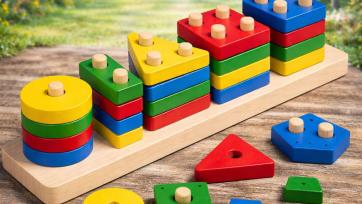
2. Wooden Shape Sorters

A wooden shape sorter is an excellent educational toy for babies and toddlers. Children learn to identify different shapes and discover which opening matches each piece.

Shape sorters may help develop:

  • Hand-eye coordination

  • Fine motor skills

  • Shape recognition

  • Logical thinking

  • Patience

Parents can make the activity more educational by naming each shape and color while the child plays.

3. Age-Appropriate Puzzles

Puzzles are some of the best learning toys for improving concentration and problem-solving.

Simple wooden puzzles with large handles are suitable for toddlers, while preschoolers may enjoy alphabet, number, animal, or vehicle puzzles. Older children can move toward more complicated jigsaw puzzles.

Puzzles teach children to examine details, test different solutions, and continue working when the correct answer is not immediately obvious.

When buying a puzzle, choose one that is challenging without being frustrating. A puzzle that is too easy may become boring, while one that is too difficult may discourage the child.

4. Magnetic Building Tiles

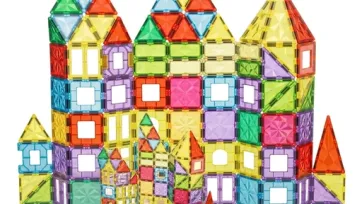
Magnetic building tiles are popular STEM toys that allow children to create two-dimensional patterns and three-dimensional structures.

Children can experiment with:

  • Geometry

  • Balance

  • Magnetic attraction

  • Structural design

  • Color combinations

  • Creative construction

These tiles can be used to build castles, houses, rockets, animals, and geometric shapes.

Parents should carefully inspect magnetic toys for damage. High-powered magnets can cause serious harm if swallowed, so magnetic toys should always be age-appropriate, securely manufactured, and used under proper supervision.

5. Pretend-Play Kitchen Set

A toy kitchen is more than a role-playing product. It can become a powerful language-development and social-learning toy.

Children can pretend to prepare meals, serve food, manage a restaurant, or shop for groceries. During this process, they may practice vocabulary, counting, cooperation, organization, and everyday life skills.

Pretend play can also help children understand family routines and develop confidence in communicating with others.

NAEYC recommends pretend-play materials such as toy food, dolls, puppets, vehicles, dress-up accessories, and child-sized furniture as useful play materials for young children.

6. Alphabet Learning Toys

Alphabet toys can help preschool children recognize letters and become familiar with early reading skills.

Good options include:

  • Wooden alphabet boards

  • Magnetic letters

  • Letter-matching games

  • Alphabet flash cards

  • Letter tracing boards

Instead of asking a child to memorize every letter at once, parents can introduce a few letters through games, songs, names, and familiar objects.

For example, the letter “B” can be connected with words such as ball, baby, banana, and book.

7. Counting and Number Toys

Counting toys introduce children to numbers in a practical and visual way.

Educational counting toys may include:

  • Counting bears

  • Number blocks

  • Bead mazes

  • Wooden number boards

  • Toy cash registers

  • Sorting trays

Children can practice counting, grouping, comparing quantities, and recognizing number symbols.

A toy cash register can be particularly useful because it combines pretend play with early mathematics and money-management concepts.

8. Science Experiment Kits

Science kits are excellent educational gifts for children who enjoy asking questions and discovering how things work.

Depending on the child’s age, a science kit may include experiments involving:

  • Magnets

  • Crystals

  • Plants

  • Weather

  • Chemistry

  • Electricity

  • Light

  • Water

The best science kits for kids provide clear instructions, age-appropriate materials, and adult supervision guidance.

Parents should check whether protective equipment is required and ensure that children do not taste, inhale, or mix substances without supervision.

9. Coding Robots

Coding robots are among the best STEM toys for school-age children.

Some beginner coding robots use physical buttons, cards, or tiles instead of requiring a smartphone or tablet. More advanced models may allow children to create commands using an app or computer.

Coding toys may help children learn:

  • Sequencing

  • Cause and effect

  • Logical reasoning

  • Debugging

  • Pattern recognition

  • Basic programming concepts

The best coding robot is not necessarily the most expensive one. Parents should choose a product that matches the child’s current skill level and does not require complicated subscriptions or accessories.

10. Art and Craft Sets

Art supplies are affordable educational toys that can provide hours of creative play.

A basic art set may include crayons, washable markers, colored pencils, paper, child-safe scissors, stickers, paint, and modeling clay.

Art activities may support:

  • Fine motor development

  • Creativity

  • Self-expression

  • Color recognition

  • Focus

  • Visual planning

Open-ended art materials are often more valuable than kits that require every child to produce exactly the same final result.

11. Modeling Dough

Modeling dough is a simple sensory and educational toy for preschoolers.

Rolling, squeezing, cutting, flattening, and shaping dough can strengthen the small muscles used for writing, fastening clothes, and handling everyday objects.

Parents can use modeling dough to teach:

  • Letters

  • Numbers

  • Shapes

  • Animals

  • Colors

  • Size comparisons

NAEYC notes that playdough activities, particularly when combined with props and conversation, can support children’s learning and development.

Always check the recommended age and supervise children who may attempt to eat the dough.

12. Musical Instruments for Kids

Child-sized musical instruments can introduce rhythm, sound, movement, and creative expression.

Popular choices include:

  • Toy drums

  • Xylophones

  • Tambourines

  • Maracas

  • Small keyboards

  • Bells

Musical play can also encourage listening, turn-taking, pattern recognition, and coordination.

Parents do not need to buy an expensive electronic music system. A few durable, age-appropriate instruments can provide a more active learning experience.

13. Memory and Matching Games

Matching games help children practice visual memory, attention, and concentration.

A typical game may require children to turn over cards and remember where matching pictures are located.

For younger children, start with a small number of cards. Additional cards can be introduced as the child becomes more confident.

Matching games are available in many themes, including animals, vehicles, numbers, letters, dinosaurs, emotions, and everyday objects.

14. Educational Board Games

Board games can combine learning with family interaction.

Depending on the game, children may practice:

  • Reading

  • Counting

  • Strategy

  • Vocabulary

  • Cooperation

  • Decision-making

  • Taking turns

Board games can also teach children how to follow rules, manage disappointment, and complete an activity with other people.

Choose a game with a realistic playing time. Younger children may struggle with games that require them to remain seated for an extended period.

15. Microscope for Kids

A beginner microscope is an excellent educational toy for children interested in biology, nature, and scientific observation.

Children can examine safe items such as leaves, fabric, paper, flower petals, feathers, and prepared slides.

Before purchasing a kids’ microscope, compare:

  • Magnification

  • Image quality

  • Lighting

  • Durability

  • Included slides

  • Ease of focusing

  • Recommended age

A low-cost microscope with clear controls may be more useful for a beginner than a complicated model with exaggerated magnification claims.

How to Choose the Best Educational Toy

The best educational toy should match the child’s age, interests, abilities, and developmental stage.

Before buying, parents should consider the following factors.

Age Recommendation

Always read the manufacturer’s age label. Age recommendations are not only related to difficulty. They may also identify safety concerns such as small parts and choking hazards.

The U.S. Consumer Product Safety Commission advises parents to follow the age guidance and safety information printed on toy packaging. Toys that create a choking risk for children under three must carry relevant warnings, while products intended for children under three are subject to restrictions concerning small parts.

Child’s Interests

An educational toy will provide little value if the child does not want to use it.

A child who loves vehicles may enjoy construction toys, car ramps, or mechanical kits. A child interested in animals may prefer puzzles, figurines, books, or science kits based on wildlife.

Open-Ended Play

Look for toys that can be used in multiple ways.

Blocks, art supplies, dolls, play food, magnetic tiles, and modeling dough allow children to create their own activities instead of following only one automated function.

Durability

Educational toys should be strong enough to handle regular use. Check for loose parts, sharp edges, weak battery compartments, peeling paint, and pieces that may break easily.

Opportunities for Interaction

The most valuable learning often occurs when a parent, sibling, teacher, or caregiver joins the activity.

Parents can ask questions such as:

  • What are you building?

  • How many pieces did you use?

  • What do you think will happen next?

  • Can you find another solution?

  • Why did the tower fall?

Playing alongside a child and asking thoughtful questions can help the child remain engaged and use toys more productively.

Educational Toy Safety Tips

Parents should regularly inspect toys and remove broken products.

For babies and toddlers, avoid toys with detachable small pieces, unsecured batteries, sharp edges, long cords, or damaged magnets.

It is also important to remember that children develop at different rates. The CDC explains that developmental milestones include how children play, learn, speak, behave, and move. Parents can consider these abilities when deciding whether a particular toy is appropriate.

Adult supervision is especially important when children use science kits, magnetic toys, electronic products, water-play toys, or items containing small accessories.

Final Thoughts

The best educational toys for kids do not need to be expensive or highly technological. Building blocks, puzzles, pretend-play sets, art supplies, musical instruments, and hands-on STEM toys can all create meaningful learning opportunities.

The most important factor is how the child uses the toy. A simple product that encourages imagination, experimentation, conversation, and parent-child interaction may offer greater educational value than an expensive toy that performs every action automatically.

Choose toys according to the child’s age and interests, read all safety labels, and look for products that encourage children to think, create, communicate, and explore.
Advertisement
Indoor Toys That Keep Children Entertained Without Screens
Indoor Toys That Keep Children Entertained Without Screens: A Complete Parent's Guide Rainy afternoons, school holidays and weekends at home often leave parents searching for ways to keep children happily occupied. While tablets, televisions and smartphones can provide quick entertainment, many families are looking for healthier alternatives that encourage creativity, movement and independent thinking. This is where the right indoor toys can make a real difference. Indoor toys offer children the opportunity to learn, explore and play without relying on digital screens. Whether it's building an imaginative world from construction pieces, solving a challenging puzzle or creating a masterpiece with art supplies, these toys encourage meaningful play while supporting healthy development. Screen-free play is more important than ever. Excessive screen time can reduce opportunities for physical activity, imaginative thinking and social interaction. By offering engaging indoor toys, parents can create a balanced environment where children remain entertained while developing valuable life skills. The best indoor toys are versatile, age-appropriate and enjoyable enough to hold a child's attention for extended periods. They encourage independent play, family interaction and creative problem-solving, making them a worthwhile investment for every household. In this guide, you'll discover the benefits of indoor toys, how they support child development, which toys suit different age groups and what to consider before making a purchase. Why Indoor Toys Are Important Indoor toys provide far more than entertainment. They allow children to continue learning and developing even when outdoor play is not possible. Good indoor toys encourage: Creative thinking Problem-solving Communication Fine motor development Independent play Family interaction Emotional confidence Concentration They also help children stay active and engaged during poor weather or when outdoor space is limited. Benefits of Screen-Free Indoor Play Replacing some screen time with traditional play offers several long-term benefits. Encourages Creativity Without digital instructions or fixed outcomes, children rely on their own imagination to create stories, solve problems and invent games. Improves Concentration Many indoor activities require patience and focus. Building models, completing puzzles and creating artwork all encourage children to remain engaged for longer periods. Supports Social Skills Board games, role play and cooperative activities encourage conversation, sharing and teamwork. Develops Motor Skills Many indoor toys strengthen both fine and gross motor skills through hands-on activities. Reduces Overstimulation Unlike many electronic devices, traditional toys often create a calmer play environment that allows children to think independently. Encourages Independent Play Children become more confident when they learn to entertain themselves without relying on digital devices. Best Indoor Toys for Babies Babies learn through movement, touch and exploration. Suitable indoor toys include: Soft activity gyms Sensory balls Stacking cups Soft building blocks Fabric books Shape sorters Musical toys Activity cubes These toys encourage reaching, grasping and early exploration while supporting sensory development. Indoor Toys for Toddlers Toddlers enjoy activities that combine movement with imagination. Excellent choices include: Building blocks Pretend play kitchens Ride-on toys suitable for indoor use Ball pits Chunky puzzles Push-and-pull toys Play tents Drawing boards Toy animals Stacking toys These toys help develop creativity, coordination and early problem-solving while keeping energetic toddlers entertained indoors. Indoor Toys for Preschool Children Preschool children enjoy more detailed activities that challenge both their imagination and thinking skills. Popular indoor toys include: Construction sets Craft kits Dollhouses Puppet theatres Magnetic building toys Marble runs Pretend shop play sets Toy tool benches Play kitchens Storytelling cards These toys encourage independent play, communication and creative thinking while supporting school readiness. Indoor Toys for School-Age Children As children grow older, they often look for toys that challenge their imagination, creativity and problem-solving abilities. The best indoor toys for this age group encourage independent thinking while also providing opportunities for family play. Some excellent options include: Strategy board games Advanced construction sets Arts and crafts kits Science experiment kits Model-building projects Card games Marble runs Building planks Puzzle games Creative writing and storytelling games These toys help children stay entertained for longer periods while developing valuable cognitive and social skills. How to Choose the Best Indoor Toys Not every indoor toy provides meaningful play. The most valuable options encourage children to think, create and explore rather than simply watching or pressing buttons. When choosing indoor toys, consider the following: Your child's age and interests. The available space in your home. The toy's educational value. Whether it encourages active participation. Durability and build quality. Opportunities for independent play. Whether siblings can enjoy it together. Selecting toys that can be used in multiple ways usually provides greater long-term value than toys designed for only one activity. Creating an Engaging Indoor Play Space The environment where children play can be just as important as the toys themselves. A well-organised play area encourages children to explore independently and keeps playtime enjoyable. Consider these simple ideas: Keep toys within easy reach. Rotate toys every few weeks to maintain interest. Use labelled storage boxes or baskets. Create separate areas for reading, building and creative activities. Ensure there is enough floor space for active play. Display only a limited selection of toys at one time to avoid overwhelming children. An organised space often leads to more focused and imaginative play. Buying Guide Before purchasing indoor toys, take a few moments to consider what will genuinely benefit your child. Choose Toys That Match Developmental Stages Children enjoy toys that challenge them without causing frustration. Always consider your child's current abilities. Prioritise Open-Ended Play Construction toys, craft materials and pretend play sets often provide much greater long-term value than toys with a single purpose. Consider Storage Requirements Large toys may not be practical for smaller homes. Foldable or stackable toys can help save space. Think About Durability Indoor toys are often used every day, so choosing well-made products can reduce replacement costs over time. Encourage Variety A balanced collection might include creative toys, building toys, puzzles, books and pretend play equipment to support different aspects of development. Safety Tips Even toys designed for indoor use should be chosen and maintained carefully. Follow these safety recommendations: Always check the recommended age range. Inspect toys regularly for damage. Remove broken pieces immediately. Keep small parts away from young children. Secure heavy furniture and storage units. Keep play areas free from trip hazards. Clean toys regularly using child-safe cleaning products. Supervise activities involving small accessories or craft materials. Safe play allows children to explore confidently while reducing unnecessary risks. Common Buying Mistakes Parents sometimes buy indoor toys that quickly lose their appeal. Avoid these common mistakes: Buying Too Many Toys at Once An overcrowded play area can reduce children's ability to focus and enjoy individual toys. Choosing Toys Based Only on Trends Popular toys may lose their appeal quickly, whereas timeless toys often provide years of enjoyment. Ignoring Available Space Large toys can make smaller homes feel cluttered and may limit safe play. Focusing Only on Entertainment The best indoor toys combine fun with opportunities for learning and development. Forgetting to Rotate Toys Keeping every toy available all the time can reduce excitement. Rotating toys regularly helps maintain children's interest. Frequently Asked Questions What are the best indoor toys for children? The best indoor toys encourage creativity, problem-solving and active participation. Construction toys, puzzles, pretend play sets, craft materials and board games are all excellent choices. Can indoor toys reduce screen time? Yes. Engaging toys that encourage imaginative and hands-on play can naturally reduce the amount of time children spend using electronic devices. Are indoor toys suitable for small homes? Absolutely. Many compact toys, such as puzzles, magnetic building sets, books and craft supplies, provide excellent play value without taking up much space. How often should indoor toys be rotated? Many families rotate toys every two to four weeks to keep play fresh and interesting. Should children play independently indoors? Independent play helps children develop confidence, creativity and problem-solving skills. Parents can supervise while allowing children to lead their own play. Final Thoughts Indoor toys provide children with valuable opportunities to learn, create and stay active without relying on digital entertainment. Whether the weather keeps everyone inside or you simply want to encourage more screen-free play, the right toys can transform ordinary days into exciting learning experiences. By choosing versatile, age-appropriate and durable toys, parents can support creativity, independence and healthy development while making everyday play more enjoyable. A carefully selected collection of indoor toys offers lasting value, encourages meaningful family time and helps children build skills they will use throughout life.
Best Toys for 5-Year-Old Kids
Best Toys for 5-Year-Old Kids: A Parent's Complete Guide to Fun, Learning, and Smart Choices Choosing the best toys for a 5-year-old can feel overwhelming. Walk into any toy store or browse online, and you'll find thousands of options claiming to be educational, entertaining, or the perfect gift. The truth is that not every toy helps a child grow. Some capture attention for only a few minutes, while others inspire creativity, build confidence, and encourage learning for months or even years. At five years old, children are naturally curious. They ask endless questions, invent imaginative stories, solve simple problems, and enjoy activities that challenge both their minds and bodies. The right toy supports these important developmental milestones while making playtime exciting. This guide explores the best toys for 5-year-old kids, explains why they matter, and helps parents choose toys that offer lasting value rather than short-lived entertainment. Why Age-Appropriate Toys Matter Five-year-olds are developing rapidly in nearly every area of life. Their language skills improve, they become more independent, and their imagination grows stronger every day. Toys designed for this age group match their abilities and encourage them to learn through play. Age-appropriate toys also reduce frustration. A toy that is too advanced may discourage a child, while one that is too simple quickly becomes boring. Finding the right balance keeps children engaged and motivated. What Skills Do 5-Year-Olds Develop Through Play? Play is much more than entertainment. Every game, puzzle, building activity, or pretend adventure teaches something valuable. Children at this age improve: Problem-solving skills Hand-eye coordination Fine motor skills Creativity Communication Memory Concentration Social interaction Emotional confidence Well-designed toys naturally support these abilities without making learning feel like schoolwork. Building Toys Encourage Creative Thinking Construction toys remain among the best choices for five-year-olds. Whether children build houses, castles, vehicles, bridges, or entire cities, they constantly practice planning, experimenting, and solving problems. Building toys also teach patience. A child learns that creating something impressive often requires multiple attempts, helping develop persistence and confidence. Many parents notice that construction toys continue to be used long after other toys have been forgotten. Remote Control Toys Build Coordination and Confidence Remote control toys combine excitement with skill development. Driving an RC car through obstacles or steering it around furniture requires quick thinking and precise control. Children learn to observe, react, and adjust their movements, improving coordination and reaction speed. Rechargeable remote control racing cars are especially popular because they offer longer play sessions and lower running costs than disposable battery models. Parents often enjoy joining the fun, turning RC toys into family activities instead of solo entertainment. Educational STEM Toys Make Learning Fun STEM toys introduce children to science, technology, engineering, and mathematics through hands-on activities. Instead of memorizing facts, children learn by experimenting. Examples include: Simple engineering kits Magnetic building sets Coding toys Beginner robotics Science experiment kits These toys encourage curiosity and help children understand how things work while having fun. Pretend Play Toys Develop Imagination Five-year-olds love pretending to be doctors, chefs, police officers, teachers, astronauts, or firefighters. Pretend play encourages storytelling, communication, and emotional development. Popular options include: Kitchen playsets Doctor kits Tool sets Grocery stores Dollhouses Puppet theaters Children often spend hours creating their own adventures, making these toys excellent long-term investments. Arts and Crafts Inspire Creativity Creative activities help children express their ideas while improving fine motor control. Drawing, painting, coloring, cutting, and crafting strengthen hand muscles needed for writing later in school. Popular creative toys include: Washable markers Coloring books Clay modeling kits Sticker activity books DIY craft sets Paint-by-number kits Finished projects also give children a sense of accomplishment. Outdoor Toys Keep Children Active Physical activity remains essential for healthy development. Outdoor toys encourage exercise while reducing screen time. Some excellent choices include: Scooters Balance bikes Sports sets Bubble machines Flying discs Gardening kits Ball games Regular outdoor play supports fitness, coordination, and overall well-being. Puzzle Games Improve Critical Thinking Puzzles teach children to recognize patterns, solve problems, and stay focused. At five years old, children enjoy more challenging puzzles than toddlers, but they still need designs that match their abilities. Good options include: Wooden puzzles Floor puzzles Alphabet puzzles Number puzzles Animal puzzles World map puzzles Completing puzzles builds patience and confidence. Interactive Learning Toys Many interactive toys combine lights, sounds, music, and educational activities. Quality learning toys help children practice: Reading Counting Letter recognition Vocabulary Memory Listening skills The best interactive toys encourage participation instead of simply entertaining. Plush Toys Continue to Be Important Even as children grow older, many still enjoy soft toys. Stuffed animals provide comfort, encourage nurturing behavior, and become important companions during bedtime or travel. Many children include plush toys in imaginative games, helping develop storytelling and emotional expression. Musical Toys Support Early Development Music introduces rhythm, creativity, and coordination. Simple instruments such as keyboards, drums, tambourines, and xylophones encourage children to experiment with sound while improving listening skills. Family sing-alongs often become treasured memories. Board Games Teach Social Skills Five-year-olds begin understanding simple rules and taking turns. Board games help children learn: Patience Cooperation Fair play Strategic thinking Communication Winning and losing gracefully These lessons remain valuable throughout life. Screen-Free Toys Still Have Great Value Technology has become part of everyday life, but traditional toys continue to offer unique benefits. Screen-free play encourages conversation, movement, imagination, and creativity without constant digital stimulation. Many child development experts recommend maintaining a healthy balance between technology and hands-on activities. Safety Tips When Buying Toys Safety should always come first. Parents should: Check recommended age labels. Avoid toys with sharp edges. Choose non-toxic materials. Inspect toys regularly for damage. Keep small parts away from younger siblings. Buy from trusted brands whenever possible. A safe toy allows children to explore confidently while giving parents peace of mind. How to Choose the Right Toy Instead of buying the newest trend, think about your child's interests. Ask yourself: Does my child enjoy building? Do they love vehicles? Are they creative? Do they enjoy outdoor play? Do they like solving puzzles? Would they benefit from educational activities? The answers usually point toward the perfect toy. Great Gift Ideas for 5-Year-Old Kids If you're buying a birthday or holiday gift, consider toys that combine fun with learning. Excellent choices include: Remote control racing cars Building block sets STEM activity kits Art supplies Outdoor sports toys Educational board games Pretend play sets Interactive learning toys These gifts remain enjoyable long after the excitement of opening the package has passed. Common Buying Mistakes Parents Should Avoid Many purchases end up unused because they don't match a child's interests or abilities. Avoid these common mistakes: Buying toys that are too advanced. Choosing quality based only on appearance. Ignoring safety recommendations. Purchasing toys with poor durability. Following trends without considering the child's personality. A thoughtful purchase usually delivers far greater value than an expensive one. Frequently Asked Questions What types of toys are best for 5-year-old kids? Building toys, remote control cars, STEM kits, puzzles, pretend play sets, arts and crafts, outdoor toys, and educational games are all excellent choices. Are remote control cars suitable for five-year-olds? Yes. Many beginner RC cars are specifically designed for younger children with simple controls, durable construction, and rechargeable batteries. How many toys does a 5-year-old really need? Quality matters more than quantity. A smaller collection of engaging toys often provides more meaningful play than dozens of toys that quickly lose their appeal. Should educational toys always be the priority? Educational toys are valuable, but the best toys combine learning with genuine fun. Children learn most effectively when they enjoy the activity. Final Thoughts Finding the best toys for 5-year-old kids isn't about buying the most expensive product or following every new trend. It's about choosing toys that inspire curiosity, encourage creativity, and support healthy development through meaningful play. Whether it's a remote control racing car that improves coordination, a building set that sparks imagination, a puzzle that develops critical thinking, or an outdoor toy that keeps children active, the right choice can create lasting memories while helping children build important life skills. When parents focus on quality, safety, and their child's unique interests, every play session becomes an opportunity to learn, grow, and have fun.
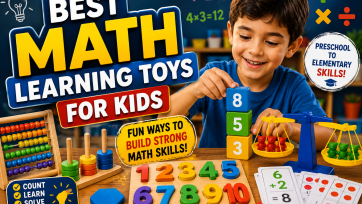
Best Math Learning Toys for Preschoolers and Elementary Students
Math does not begin with worksheets. Long before children solve written equations, they compare sizes, count objects, recognize patterns, sort colors, estimate distances, divide snacks, and notice which tower is taller. That is why the best math learning toys do not feel like schoolwork. They turn numbers, shapes, measurement, and problem-solving into activities children genuinely want to repeat. A preschooler may learn counting by moving colorful bears into cups. An elementary student may understand multiplication more clearly through tiles, blocks, or a strategy game. The goal is not to make children memorize answers faster. It is to help them understand what numbers actually mean. This guide covers the best math toys for different ages, the skills they teach, and what parents should look for before spending money. What Makes a Toy Good for Learning Math? A useful math toy should allow children to see, touch, move, group, arrange, or compare objects. Young children often understand abstract ideas more easily when they can physically interact with them. For example, the number five becomes more meaningful when a child can hold five blocks, remove two, and see that three remain. Strong math toys usually support one or more of these skills: Counting Number recognition Sorting Addition and subtraction Patterns Shapes Measurement Fractions Multiplication Logical reasoning Money skills Spatial awareness The best products can be used in several ways rather than offering only one short activity. Best Math Toys for Preschoolers Preschool math should remain playful, visual, and hands-on. Children between three and five years old are usually developing early number sense, shape recognition, matching, sorting, and simple comparison skills. Counting Bears and Sorting Animals Small counting figures are among the most flexible math learning toys for preschoolers. Children can: Count them Sort them by color Group them by size Create patterns Compare quantities Practice simple addition A parent might place three red bears and two blue bears on the table and ask how many there are altogether. The same toy can later be used for subtraction, grouping, or early multiplication. For children under three, avoid small pieces that may become choking hazards. Number Puzzles Wooden number puzzles help children connect spoken number names with written symbols. A child may already know how to count to ten but still struggle to recognize the printed number seven. A number puzzle gives them repeated visual exposure. Good number puzzles often include pictures or objects that match the number shown. For example, the piece marked “4” may include four stars or four animals. This helps the child understand that the symbol represents a quantity. Bead Mazes and Counting Frames Bead mazes and abacus-style counting toys allow children to move pieces while counting. These toys can support: One-to-one counting Color recognition Simple addition Simple subtraction Comparing groups Parents should encourage children to move one bead for each number spoken. This prevents children from reciting numbers without understanding how counting connects to actual objects. Shape Sorters and Geometry Boards Shape toys introduce more than the names of circles and squares. Children begin to notice corners, sides, curves, size, rotation, and how pieces fit together. Geometry boards, tangram-style pieces, and pattern blocks can help children build pictures and explore spatial relationships. Ask questions such as: Which shape has three sides? Can two triangles make a square? Which piece fits this space? What happens if you turn it around? These conversations make the toy far more educational. Peg Boards and Pattern Cards Peg boards allow preschoolers to copy or create patterns. A child may arrange pieces in a sequence such as red, blue, red, blue. Later, they may work with more complex patterns such as red, red, yellow, red, red, yellow. Pattern recognition is an important early math skill because it helps children predict what comes next. Best Math Toys for Kindergarten and Early Elementary Students Once children begin formal schooling, math toys can help make classroom concepts easier to understand. The strongest options show children why an answer works rather than simply testing whether they remember it. Linking Cubes Linking cubes can be connected into groups, towers, or number lines. They are useful for teaching: Addition Subtraction Place value Patterns Measurement Multiplication groups For example, a child can build one tower of eight cubes and another tower of five cubes, then compare their height. Older children can create equal groups to understand multiplication. Ten Frames A ten frame is a simple rectangular grid containing ten spaces. Children place counters into the spaces to visualize numbers. A partially filled ten frame helps children see relationships quickly. If eight spaces are filled, they can also see that two more are needed to make ten. Ten frames are useful for: Number recognition Addition Subtraction Making ten Mental math Although the tool looks simple, it can build a strong foundation for more advanced calculations. Toy Cash Registers A toy cash register combines mathematics with pretend play. Children can practice: Recognizing coins Counting money Giving change Adding prices Comparing costs Understanding budgets A pretend shop can make math feel relevant to everyday life. Parents can label toys or household objects with simple prices and give the child a limited amount of play money. The child must decide what they can afford. Math Board Games Board games can make repeated math practice less tedious. Depending on the game, children may count spaces, add dice totals, recognize patterns, compare numbers, or make strategic decisions. The best math board games involve actual thinking rather than depending entirely on luck. Look for games that match the child’s ability. A difficult game may cause frustration, while a very easy one may lose its appeal quickly. Number Balance Toys A number balance uses weights or numbered pieces to demonstrate equality. For example, placing a weight on one side marked six may balance with two weights marked three on the other side. This helps children understand that different number combinations can have the same total. Number balances are especially useful for visual learners who struggle with written equations. Best Math Toys for Ages 7 to 9 Children in this age range often begin working with multiplication, division, fractions, measurement, and more complex problem-solving. Hands-on materials can prevent these concepts from feeling overly abstract. Fraction Tiles and Fraction Circles Fractions are easier to understand when children can compare physical pieces. A child can place two quarter pieces beside one half piece and see that they are equal in size. Fraction toys may help teach: Halves Thirds Quarters Equivalent fractions Comparing fractions Adding simple fractions Color-coded pieces are helpful, but parents should also encourage children to focus on the size and value of each part. Multiplication Boards Multiplication boards use pegs, tiles, cards, or sliding pieces to demonstrate number groups. Instead of only memorizing that four times three equals twelve, a child can create four groups containing three objects each. This builds understanding before memorization. A multiplication toy is most effective when it allows the child to discover patterns, such as why every answer in the five-times table ends in zero or five. Measuring Kits Child-friendly measuring tapes, rulers, scales, cups, and clocks can turn ordinary activities into math practice. Children can measure: Furniture Toys Ingredients Height Distance Weight Time Measurement toys become more meaningful when connected to real tasks. A child may measure cardboard before building a model or use cups while helping prepare a recipe. Logic Puzzle Games Logic games challenge children to arrange pieces, solve visual problems, or complete tasks under specific rules. These toys strengthen: Planning Deduction Sequencing Spatial reasoning Persistence Many logic games include challenge cards that gradually increase in difficulty. This makes them useful for independent play and long-term learning. Best Math Toys for Ages 9 and Older Older elementary students may prefer math toys that feel like puzzles, games, construction projects, or real-world challenges. At this stage, avoid products that appear too childish. Strategy Board Games Strategy games require children to plan ahead, manage resources, calculate risks, and compare possible outcomes. They may not be sold specifically as math toys, yet they can involve significant mathematical thinking. Games involving money, trading, territory, probability, or resource management are particularly useful. Geometry Construction Sets Geometry sets allow children to build polygons, three-dimensional shapes, bridges, domes, and other structures. These products can introduce: Angles Symmetry Area Perimeter Volume Structural geometry Children who dislike traditional math exercises may become more interested when geometry is connected to building. Mental Math Card Games Card games can improve calculation speed without making practice feel repetitive. Children may race to create a target number, compare fractions, identify factors, or combine cards using different operations. Parents should avoid placing too much emphasis on speed. Accuracy and understanding matter more than winning quickly. Math Escape-Room Games Math mystery and escape-room games ask children to solve a series of clues before reaching a final answer. These activities combine arithmetic with reading, reasoning, and teamwork. They are particularly useful for children who enjoy stories and challenges more than standard practice sheets. Choosing the Right Math Toy A toy can look educational and still provide very little learning value. Before buying, ask the following questions. Does It Match the Child’s Current Skill Level? A preschooler learning to count needs a different toy from a nine-year-old learning fractions. Choose a product that is slightly challenging but still manageable. Can It Be Used in More Than One Way? Open-ended math toys usually provide better long-term value. Counters, cubes, tiles, blocks, cards, and measuring tools can support several concepts as the child grows. Does It Explain the Concept Visually? The best math toys make an idea easier to see. A fraction toy should show how parts form a whole. A multiplication toy should demonstrate equal groups. A counting toy should connect numbers with quantities. Does the Child Find It Interesting? A technically excellent toy will not help if it remains unopened. Children who enjoy pretend play may prefer a cash register. Builders may like geometry sets. Competitive children may enjoy board games. Puzzle lovers may prefer logic challenges. Common Mistakes Parents Make One common mistake is buying a toy that focuses only on memorization. Flash cards and electronic quizzes can have value, but children also need to understand the reasoning behind the answer. Another mistake is correcting every error immediately. Give children time to think, test ideas, and notice their own mistakes. A wrong answer can lead to useful discussion. Parents should also avoid turning every game into a lesson. Sometimes the best learning happens naturally while the child is playing. Are Electronic Math Toys Worth Buying? Electronic math toys can provide sounds, feedback, timed challenges, and different difficulty levels. They may be useful for independent practice, but they should not replace physical play and conversation. Before buying, check whether the toy: Gives meaningful explanations Allows multiple skill levels Has adjustable volume Requires an app Contains advertisements Needs a subscription Stores personal information Works without constant internet access A simple set of counters or blocks may offer more educational flexibility than an expensive electronic device. Final Takeaway The best math learning toys help children see mathematics in the world around them. For preschoolers, start with counting figures, number puzzles, shape sorters, patterns, and bead toys. Early elementary students may benefit from linking cubes, ten frames, toy money, balance scales, and board games. Older children can explore fractions, multiplication, measurement, geometry, logic, and strategy through more advanced games and construction sets. Math becomes easier when children are allowed to touch it, move it, build it, and use it. A child who understands why numbers work is far better prepared than one who has only memorized the answer.
Best Play Tents for Kids in 2026
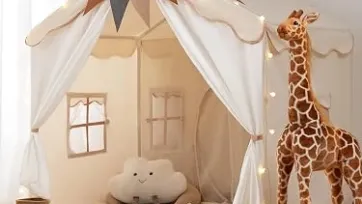
Best Play Tents for Kids in 2026: Creating Magical Spaces for Imaginative Play Every child dreams of having a special place they can call their own. A play tent transforms an ordinary corner of a bedroom or garden into a magical world where children can read, imagine, build, relax, and create unforgettable adventures. Whether it's a castle, space station, woodland hideaway, camping tent, or teepee, play tents encourage independent play while giving children a cosy space to explore their imagination. In 2026, play tents have become one of the most popular toys for families looking to encourage screen-free entertainment. Available in a wide variety of designs, sizes, and themes, they suit babies, toddlers, preschoolers, and older children alike. This guide explains everything parents need to know about choosing the best play tents for kids in 2026. Why Play Tents Are So Popular Children naturally enjoy having a private space where they can imagine, create, and play without distractions. A play tent quickly becomes: A secret clubhouse A fairy castle A pirate ship A jungle camp A reading corner A superhero headquarters A space station A cosy hideaway Because children invent their own stories, every day inside the tent becomes a completely new adventure. Benefits of Play Tents Play tents provide much more than entertainment. Some of their biggest benefits include: Encourage imaginative play Improve creativity Build confidence Support independent play Develop communication skills Encourage storytelling Create quiet reading spaces Promote social interaction Reduce screen time Children also enjoy having a calm space where they can relax after busy activities. Indoor Play Tents Indoor tents are perfect for bedrooms, playrooms, and living rooms. Popular indoor themes include: Princess castles Space rockets Teepees Fairy houses Safari tents Reading tents They provide children with a dedicated area for imaginative play throughout the year. Outdoor Play Tents Outdoor play tents encourage children to spend more time in the fresh air. They're ideal for: Gardens Parks Family picnics Camping trips Beach holidays Outdoor models are usually made from weather-resistant materials that can handle light wind and sunshine. Teepee Tents Teepee tents remain one of the most stylish choices for modern homes. Parents love them because they: Look attractive Save space Match nursery décor Create cosy reading corners Encourage imaginative play Many families decorate teepees with cushions, fairy lights, and blankets to create a relaxing retreat. Pop-Up Play Tents Pop-up tents are extremely convenient. Their advantages include: Quick assembly Lightweight design Easy storage Portable construction Simple folding mechanism They're especially useful for families with limited storage space. Play Tents Encourage Reading Many parents transform play tents into reading corners. Adding: Books Soft cushions Blankets Floor mats Plush toys creates a quiet environment where children enjoy reading independently. Role Play Inside Play Tents A play tent can become almost anything. Children enjoy pretending to run: Cafés Hospitals Shops Campsites Schools Fire stations Pretend play encourages creativity while helping children develop communication and problem-solving skills. Choosing the Right Play Tent Before buying, consider: Your child's age Available space Indoor or outdoor use Material quality Ease of assembly Portability Safety certification A durable tent with washable fabric usually provides the best long-term value. Safety Tips Always choose play tents that: Meet recognised safety standards Use flame-resistant materials Have breathable mesh windows Include sturdy poles Match the recommended age Regularly inspect the frame and fabric for signs of wear. Common Buying Mistakes Parents sometimes focus only on appearance. Avoid: Weak plastic poles Poor ventilation Difficult assembly Cheap fabric Tents that are too small Choosing a larger, better-quality tent usually provides many more years of enjoyable play. Decorating a Play Tent Children love personalising their own space. Popular additions include: Fairy lights Soft rugs Floor cushions Stuffed animals Bunting Decorative pillows Simple decorations make the tent feel even more special. Why Play Tents Make Excellent Gifts Play tents are ideal gifts because they combine imagination, comfort, and creativity. They're perfect for: Birthdays Christmas First bedrooms Playroom makeovers Family celebrations Unlike many toys that lose their appeal quickly, a play tent often becomes part of a child's everyday routine. Frequently Asked Questions What is the best play tent for children? The best play tent depends on your child's age and interests. Teepees, castle tents, rocket tents, and pop-up play tents are among the most popular choices. At what age can children use play tents? Many play tents are suitable from around two years old, although larger family play tents can be enjoyed by older children as well. Are play tents educational? Yes. They encourage creativity, storytelling, communication, role play, independent thinking, and social development. Can play tents be used outdoors? Many models are designed for both indoor and outdoor use, although parents should always follow the manufacturer's recommendations regarding weather conditions. Final Thoughts The best play tents for kids in 2026 offer much more than a place to play. They create magical spaces where children can read, imagine, relax, and build unforgettable adventures. Whether it's a cosy indoor teepee, a colourful castle, or an outdoor camping tent, these toys encourage creativity while giving children a space that feels uniquely their own. By choosing a high-quality play tent, parents provide far more than another toy—they create a world where imagination can grow every single day.
Best Magnetic Tiles for Kids in 2026
Best Magnetic Tiles for Kids in 2026: A Complete Parent's Buying Guide Magnetic tiles have become one of the fastest-growing educational toys for children, and in 2026 they continue to be a favourite among parents, teachers, and childcare professionals. Unlike traditional building blocks, magnetic tiles allow children to create colourful 2D and 3D structures using magnetic connections, making construction easier, more creative, and more engaging. From castles and rockets to bridges, race tracks, and imaginative cities, magnetic tiles encourage children to experiment with design while developing essential STEM skills. They are suitable for toddlers, preschoolers, and older children, making them one of the few toys that truly grow with a child. If you're looking for a toy that combines creativity, education, and long-term value, magnetic tiles deserve a place at the top of your shopping list. What Are Magnetic Tiles? Magnetic tiles are colourful geometric shapes with built-in magnets that connect together from every side. Children can build: Houses Towers Castles Animals Cars Bridges Space stations Marble runs Robots Entire cities Because the magnets hold the pieces together securely, children can create larger and more complex structures than they could with ordinary blocks. Why Magnetic Tiles Are So Popular One reason magnetic tiles remain so popular is their simplicity. Children don't need instructions to start building. They naturally experiment with different shapes, angles, and designs while discovering how magnets work. Every creation is unique, encouraging hours of open-ended play without becoming repetitive. Benefits of Magnetic Tiles Magnetic tiles support many areas of child development. Some of their biggest benefits include: Encourage creativity Improve problem-solving skills Develop fine motor skills Strengthen hand-eye coordination Build spatial awareness Introduce STEM concepts Encourage teamwork Improve concentration Reduce screen time Children also gain confidence as they successfully complete larger and more detailed structures. Magnetic Tiles Support STEM Learning Magnetic tiles naturally introduce Science, Technology, Engineering, and Mathematics through play. Children begin exploring concepts such as: Balance Symmetry Geometry Engineering Structural design Gravity Magnetism Learning happens naturally because children discover these ideas while building. Best Magnetic Tiles for Toddlers Toddlers benefit from large magnetic tiles that are easy to hold and safe to handle. Simple building activities include: Stacking walls Building towers Making colourful patterns Creating basic houses These activities improve coordination while introducing early problem-solving. Magnetic Tiles for Preschoolers Preschool children quickly begin creating more advanced structures. Popular ideas include: Castles Garages Dinosaur parks Zoos Airports Bridges These projects encourage storytelling alongside creative construction. Magnetic Marble Run Sets Magnetic marble runs combine engineering with exciting movement. Children build tracks using magnetic pieces before watching marbles travel through: Loops Drops Tunnels Curves Towers These sets teach cause and effect while encouraging experimentation. Educational Benefits Beyond Building Magnetic tiles can also support early classroom learning. Parents and teachers use them to teach: Colours Shapes Counting Patterns Sorting Basic mathematics Children often enjoy these activities because they feel like games rather than lessons. Family Play and Teamwork Magnetic tiles encourage cooperative play. Children enjoy working together to build: Giant castles Tall skyscrapers Race tracks Fantasy worlds Entire towns Family building challenges create memorable experiences while strengthening communication and teamwork. How to Choose the Best Magnetic Tiles Before purchasing a set, consider: Your child's age Number of pieces Magnet strength Build quality Safety certifications Compatibility with future expansion sets Larger sets usually provide greater creative freedom and longer-lasting value. Safety Considerations Always choose magnetic tiles that: Meet recognised safety standards Use securely sealed magnets Have smooth edges Use non-toxic materials Match the recommended age Avoid poor-quality products where magnets could become loose. Common Buying Mistakes Parents sometimes focus only on price. Avoid: Weak magnets Thin plastic Poor-quality construction Small starter sets that limit creativity Unknown manufacturers without safety testing Investing in a well-made set often saves money over time because it lasts for many years. Caring for Magnetic Tiles Magnetic tiles require very little maintenance. To keep them in excellent condition: Wipe with a damp cloth. Avoid excessive heat. Store all pieces together. Keep magnets clean. Inspect for damage occasionally. Proper care allows children to enjoy them for years. Why Magnetic Tiles Make Brilliant Gifts Magnetic tiles are one of the few toys that children continue using as they grow older. They're suitable for: Birthdays Christmas School achievements Family celebrations Parents appreciate gifts that combine creativity, education, and durability in one product. Frequently Asked Questions Are magnetic tiles safe for children? Yes. High-quality magnetic tiles with securely enclosed magnets and recognised safety certifications are safe when used according to the recommended age. What age are magnetic tiles suitable for? Most sets are designed for children aged 3 years and above, although some larger sets are suitable for younger children under adult supervision. Do magnetic tiles help child development? Absolutely. They improve creativity, engineering skills, fine motor development, spatial awareness, and problem-solving while encouraging independent learning. Are magnetic tiles worth buying? Yes. Their educational value, durability, and endless building possibilities make them one of the best long-term toy investments for families. Final Thoughts The best magnetic tiles for kids in 2026 combine creativity, STEM learning, and imaginative play in one versatile toy. Whether children are building colourful castles, designing marble runs, constructing vehicles, or inventing futuristic cities, magnetic tiles encourage exploration, experimentation, and independent thinking. Unlike many toys that lose their appeal after a few weeks, magnetic tiles continue inspiring new ideas year after year. By choosing a high-quality set with strong magnets and durable construction, parents can give children a toy that supports learning, creativity, and countless hours of screen-free fun.
Best Pretend Play Toys for Kids in 2026: Inspiring Imagination Through Play
Best Pretend Play Toys for Kids in 2026: Inspiring Imagination Through Play Children don't just play—they imagine, create, and learn. One moment they're running a busy café, the next they're treating patients in a hospital or flying a rocket into space. Pretend play allows children to explore different roles, solve everyday problems, and express their creativity in ways that no screen can replicate. In 2026, pretend play toys remain one of the most valuable investments parents can make. They support language development, emotional intelligence, confidence, and social skills while giving children endless opportunities to invent their own adventures. From toy kitchens and doctor's kits to supermarkets and construction tools, pretend play transforms ordinary moments into meaningful learning experiences. This guide explores the best pretend play toys for kids in 2026 and explains why they deserve a place in every child's playroom. What Are Pretend Play Toys? Pretend play toys are designed to encourage children to imitate real-life situations and invent imaginary stories. These toys allow children to become: Doctors Chefs Teachers Firefighters Police officers Shopkeepers Builders Scientists Farmers Astronauts Instead of following fixed rules, children create their own adventures using imagination and creativity. Why Pretend Play Is Important Pretend play is more than simple entertainment. When children act out different roles, they learn how people communicate, solve problems, cooperate, and understand emotions. Research has consistently shown that imaginative play supports healthy cognitive, emotional, and social development during early childhood. Benefits of Pretend Play Toys Pretend play helps children develop essential life skills. Some of the biggest benefits include: Encourages creativity Improves communication skills Builds confidence Supports emotional development Strengthens problem-solving abilities Expands vocabulary Encourages teamwork Improves social interaction Reduces screen time Every new role gives children another opportunity to learn through experience. Toy Kitchen Sets Kitchen playsets continue to be one of the most popular pretend play toys. Children enjoy preparing meals, serving customers, and copying everyday cooking activities. Kitchen toys often include: Pots and pans Toy food Plates Cups Ovens Sinks Coffee machines These activities encourage communication while introducing basic household routines. Doctor Play Kits Doctor sets help children understand healthcare while reducing anxiety about medical visits. Most kits include: Stethoscope Thermometer Syringe Bandages Medical bag Reflex hammer Children enjoy treating family members, dolls, and stuffed animals while practising empathy and communication. Supermarket and Cash Register Toys Shopping games teach children about numbers, money, and customer service. Children enjoy pretending to: Scan products Count money Pack shopping bags Serve customers Organise shelves These activities naturally introduce basic maths and problem-solving skills. Tool Benches and Construction Sets Young builders love pretending to repair furniture, build houses, and fix vehicles. Popular accessories include: Toy hammers Screwdrivers Wrenches Drills Nuts and bolts Safety helmets Construction play encourages creativity while improving fine motor coordination. Dollhouses and Family Play Dollhouses encourage storytelling and emotional development. Children invent daily routines, celebrations, adventures, and family conversations while improving language and imagination. Modern dollhouses often include: Furniture Vehicles Pets Gardens Lighting features Each play session creates a completely new story. Farm and Animal Playsets Farm toys introduce children to animals and rural life. Popular farm playsets include: Barns Tractors Horses Cows Chickens Farmers These toys encourage imaginative storytelling while teaching children about nature and agriculture. Space and Adventure Play Children who dream of exploring the universe enjoy pretending to become astronauts and scientists. Popular themes include: Space stations Rockets Alien worlds Moon missions Planet exploration These toys combine imagination with curiosity about science and space. Costume Dress-Up Sets Dress-up costumes bring pretend play to life. Popular costumes include: Doctors Firefighters Police officers Superheroes Princesses Pirates Builders Costumes help children fully immerse themselves in imaginative role-play. Educational Value of Pretend Play Pretend play supports learning in many unexpected ways. Children naturally practise: Speaking Listening Negotiation Leadership Decision-making Creativity Many parents notice improvements in confidence after regular imaginative play. Choosing the Right Pretend Play Toy Before buying, consider: Your child's interests Age suitability Safety certifications Material quality Durability Opportunities for open-ended play The best pretend play toys encourage children to invent their own stories rather than follow scripted actions. Safety Tips Choose pretend play toys that: Match your child's age Have no sharp edges Use non-toxic materials Meet recognised safety standards Include sturdy construction Regularly inspect toys for loose parts or damage. Common Buying Mistakes Many parents choose toys based only on appearance. Avoid: Toys with limited play value Poor-quality materials Overly complicated electronic features Fragile accessories Toys that don't match your child's interests Simple, durable toys usually inspire longer and more creative play. Why Pretend Play Toys Make Brilliant Gifts Pretend play toys are excellent birthday and Christmas gifts because they continue providing entertainment long after they're opened. Unlike toys with only one purpose, imaginative play toys grow alongside children, allowing them to invent increasingly complex stories as they develop. Frequently Asked Questions What are pretend play toys? Pretend play toys encourage children to act out real-life situations and imaginary adventures while developing creativity, communication, and social skills. What age is suitable for pretend play? Most children begin simple pretend play between 18 months and 2 years of age, with imagination becoming much more advanced during the preschool years. Do pretend play toys help child development? Yes. They support language development, creativity, confidence, emotional intelligence, and problem-solving while encouraging independent thinking. What are the best pretend play toys? Kitchen sets, doctor's kits, tool benches, supermarket toys, dollhouses, farm sets, dress-up costumes, and space exploration toys are among the best choices. Final Thoughts The best pretend play toys for kids in 2026 encourage children to dream bigger, communicate better, and explore the world through imagination. Whether they're running a busy restaurant, repairing a broken car, caring for patients, or travelling to distant planets, every pretend adventure helps develop skills that will benefit them for years to come. By choosing high-quality, open-ended pretend play toys, parents create opportunities for creativity, confidence, and meaningful learning every single day. Sometimes the greatest adventures begin with nothing more than a toy and a child's imagination.
The Toy Box Challenge
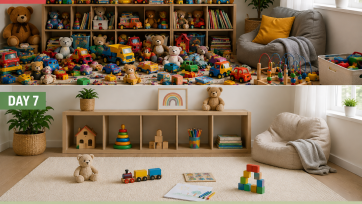
 The Toy Box Challenge: What Happens When a Child Plays With Just Five Toys for a Week? Introduction What would happen if you quietly removed almost every toy from your child's bedroom tonight? Not forever. Just for one week. It sounds like the sort of idea that would end in complaints, boredom and endless requests for the television. Most parents assume fewer toys must mean less fun. But families who have tried this simple experiment often describe something completely different. The first day can be a little strange. Children look around, searching for the usual pile of choices. By the second or third day, something unexpected begins to happen. Instead of asking, "What should I play with?", they start asking, "What can I make?" A train becomes part of a zoo. A teddy bear opens a bakery. Building blocks become a bridge, then a castle, then a hospital before lunch. Nothing new has entered the room. The only thing that's changed is the amount of choice. Psychologists sometimes refer to this as choice overload. Adults experience it when scrolling endlessly through films without deciding what to watch. Children can experience something similar when surrounded by too many toys competing for attention. This article isn't about convincing you to throw away half your child's belongings. It's about exploring a surprisingly simple experiment that has helped many families rediscover the joy of imaginative play. Why More Options Don't Always Create Better Play Imagine walking into an ice cream shop that sells five flavours. Choosing is easy. Now imagine another shop offering two hundred flavours. Suddenly the decision feels harder. Children experience a similar dilemma with toys. When every shelf is full and every basket overflows, deciding what to play with becomes an activity in itself. Instead of becoming absorbed in one game, they move rapidly from toy to toy, searching for the next burst of excitement. Sometimes, reducing choice is the quickest way to improve concentration. The Five-Toy Rule There isn't a perfect number, but five different types of toys often create a surprisingly balanced play environment. For example: A construction toy. A pretend-play toy. A creative activity. A puzzle or thinking game. A favourite comfort toy. Notice that the goal isn't to choose the five most expensive toys. It's to choose five toys that encourage completely different kinds of play. That variety matters far more than quantity. Day One: Curiosity Children often notice the difference immediately. Some ask where the missing toys have gone. Others simply begin exploring what's available. At this stage, many parents feel tempted to end the experiment. Don't. Children are adjusting. The absence of endless options encourages them to spend longer with each remaining toy. Day Three: Something Changes This is where the experiment becomes interesting. Parents frequently notice that stories become longer. Games become more detailed. Instead of abandoning a toy after ten minutes, children begin expanding the same activity throughout the day. A few blocks become an entire village. Soft toys receive names, jobs and personalities. Play starts looking less like entertainment and more like storytelling. It's difficult to force this kind of creativity. But it's surprisingly easy to make room for it. The Surprise Most Parents Mention Ask families who've tried reducing toys for a short period and one comment appears again and again. "The house actually became calmer." There were fewer arguments about tidying. Less frustration over finding missing pieces. Fewer interruptions caused by children constantly asking for something different. The change wasn't dramatic overnight. It was gradual. And because it happened naturally, many parents decided to keep the new routine long after the original experiment had ended. "What If My Child Says They're Bored?" This is usually the first concern parents raise. And it's a fair one. The word bored can sound like a warning sign, as though the experiment has failed before it has even begun. But boredom isn't always a problem to solve immediately. Think about how many of the best childhood games begin. A child stares out of the window. They pick up a blanket. A few chairs become a secret hideout. A cardboard box turns into a racing car. None of those ideas came from a toy. They came from a quiet moment when imagination finally had space to take over. If your child says they're bored during the first day or two, resist the urge to rush in with new entertainment. Give them time. More often than not, they'll create something far more interesting than anything you could have suggested. How to Try the Challenge Without Causing Drama The biggest mistake is announcing the experiment like a new household rule. Instead, make the change quietly. Pack away most of the toys while your child is asleep or out for the day. Leave a carefully chosen mix behind—enough to inspire different types of play, but not so many that the room still feels crowded. If your child asks where the other toys have gone, be honest but relaxed. "They're having a little rest. We'll bring different ones back soon." There's no need to frame it as a punishment or a lesson. Treat it as something normal. When the stored toys return a few weeks later, many children greet them with the same excitement they usually reserve for brand-new presents. What Teachers Notice in Simpler Classrooms Walk into many nurseries or early-years classrooms and you'll notice something that surprises first-time visitors. The shelves aren't overflowing. Teachers don't remove toys because they dislike fun. They do it because too many choices can make meaningful play harder. Instead, resources are often displayed neatly, with space around them. Children can see what's available. They can make a choice. And once they've chosen, they're more likely to stay focused. It's a reminder that children don't necessarily need more stimulation. They often need fewer distractions. A Seven-Day Experiment You Can Try at Home If you're curious, keep the challenge simple. Day 1: Choose five different toys and pack the rest away. Day 2: Watch without interrupting. Resist the urge to suggest games. Day 3: Take note of how long your child spends with each toy. Day 4: Join in for a while, but let your child lead the play. Day 5: Notice whether toys are being combined in new ways. Day 6: Observe whether tidying up feels easier. Day 7: Ask your child which toy they've enjoyed most and why. You may discover that their answer isn't the toy you expected. This Isn't About Owning Less Some parents hear ideas like this and assume they need to become minimalists. That's not the point. Children don't benefit because they own fewer things. They benefit because the environment allows them to focus. If your family enjoys collecting toys, that's perfectly fine. The real question isn't how many toys your child owns. It's how many they can genuinely enjoy at one time. There's a big difference. The Result May Surprise You At the end of the week, don't judge the experiment by how many toys were used. Judge it by different questions. Did your child invent longer stories? Did they seem less distracted? Was tidying up easier? Did they ask for new toys less often? Even small improvements suggest the challenge was worthwhile. And if nothing changes, that's useful information too. Every child is different, and every family finds its own rhythm. Frequently Asked Questions Is five toys the perfect number? No. Five is simply an easy starting point. Some children thrive with a few more, while others are happy with even fewer. The principle is to reduce choice, not follow a strict rule. Will my child miss the toys that are packed away? Possibly at first. However, many parents find that children quickly adapt, especially when they know the toys will return later through rotation. Can siblings share the same five toys? Yes, although it's helpful to include activities that encourage cooperative play as well as toys each child particularly enjoys. How long should the challenge last? One week is a good introduction, but many families continue rotating toys every few weeks once they see the benefits. Does this work for older children? Yes. While the types of toys change with age, older children can also benefit from a less cluttered play environment and fewer distractions. Final Thoughts The Toy Box Challenge isn't really about reducing toys. It's about increasing opportunities. Opportunities to imagine. To concentrate. To solve problems. To turn ordinary objects into extraordinary adventures. Children have an incredible ability to create worlds from very little. Sometimes, without realising it, adults make that harder by giving them too many choices at once. So before buying another toy, try something different. Open the toy box. Take a few toys out. Pack the rest away for a while. Then watch what happens. You may not discover that your child needs more toys. You may discover they simply needed a little more space to enjoy the ones they already had.
What Happened When 20 Families Reduced Their Children's Toys?
 What Happened When 20 Families Reduced Their Children's Toys? The Results May Surprise You Introduction Imagine being asked a simple question. "Would you remove half of your child's toys for two weeks?" Most parents would probably hesitate. Some would worry their child would become bored. Others might expect more arguments, more screen time and constant requests to buy new toys. Yet over the past decade, many parents have experimented with exactly this idea—not because someone told them to own less, but because they wanted to understand an increasingly common problem. Why were children surrounded by toys yet still saying they had nothing to play with? Although every family is different, the experiences shared by parents reveal some surprisingly consistent patterns. This article brings together those common observations into a practical case study, highlighting what many families noticed after simplifying their children's play environment. The goal isn't to persuade you to throw toys away. It's to explore what happens when children have fewer choices and more opportunities to use their imagination. Week One: The Unexpected Silence The first day often felt strange. Parents described children walking into the playroom, looking around and immediately noticing that something had changed. Some asked where the missing toys had gone. Others wandered from shelf to shelf before choosing something almost reluctantly. At first glance, it looked as though the experiment had failed. But several parents noticed something interesting. Instead of opening six different boxes within ten minutes, children stayed with one activity for much longer. Not because they had no other option. Because there were fewer distractions competing for their attention. The Third-Day Effect Around the third day, many parents reported a noticeable shift. The same construction blocks that had been ignored for months suddenly became the centre of elaborate cities. Toy animals appeared in homemade zoos. Blankets transformed into tents, pirate ships and secret hideouts. Children weren't receiving new toys. They were discovering new ways to use familiar ones. Several parents admitted they had forgotten just how creative their children could be when left to lead the play themselves. Less Time Choosing, More Time Playing One observation appeared repeatedly. Children seemed to spend less time deciding what to play with. This may sound like a small change, but it had a noticeable impact on the length and quality of play sessions. Instead of constantly moving between activities, many became deeply involved in a single game. Parents often described the atmosphere as calmer. Not quieter. Just more focused. Parents Noticed a Difference Too The experiment didn't only affect children. Adults found unexpected benefits as well. Tidying the playroom became quicker. Missing puzzle pieces were easier to find. Favourite toys no longer disappeared beneath mountains of forgotten items. Perhaps most importantly, several parents admitted they felt less pressure to keep buying new toys. They realised their children already owned enough to create wonderful adventures. Not Every Family Had the Same Experience One important lesson quickly became clear. There wasn't a single, perfect outcome. Some children adapted within a day. Others took nearly a week before settling into longer periods of play. A few parents even ended the experiment early because they realised they had removed too many toys at once. That wasn't a failure. It simply highlighted an important point: every child has a different personality, different interests and a different way of engaging with play. The goal wasn't to follow strict rules. It was to discover what worked best for each family. What Happened When the Toys Returned? Perhaps the most interesting part of the experiment came after the toys were brought back. Parents expected children to rush excitedly towards the stored toys before quickly losing interest again. Instead, many children treated familiar toys as though they had just received birthday presents. A train set that hadn't been touched for months suddenly became exciting. Building blocks inspired fresh ideas. Even stuffed animals found new roles in imaginative stories. Nothing about the toys had changed. Only the child's perspective had. This simple observation explains why toy rotation has become such a popular strategy among many families. One Unexpected Discovery Several parents admitted something they hadn't expected. The experiment changed their own behaviour more than their children's. Before reducing the number of toys, many believed boredom could only be solved by buying something new. Afterwards, they noticed that a few encouraging questions often worked better than another shopping trip. "Who lives in this castle?" "Where is this train travelling today?" "What happens next?" These small prompts often sparked long periods of independent play. The children already had the imagination. They simply needed space to use it. What This Means for Parents You don't need to count every toy in your home. You don't need to throw away perfectly good toys. You certainly don't need to follow somebody else's definition of the "perfect" playroom. Instead, think about the quality of play rather than the quantity of toys. Ask yourself: Does my child return to the same toys again and again? Are there toys that haven't been touched for months? Is the playroom helping my child focus or distracting them? Would rotating a few toys make play feel fresh again? Small adjustments often make a much bigger difference than expensive purchases. The Bigger Lesson Perhaps the biggest lesson from these family experiences is this: Children don't measure happiness by how full the toy cupboard is. They measure it by the adventures they create. A cardboard box can become a castle. A blanket can become a superhero cape. A handful of blocks can become an entire city. The imagination was never missing. Sometimes it was simply hidden beneath too many choices. Frequently Asked Questions Does reducing toys work for every child? No single approach works for everyone. However, many families find that reducing visible toys or rotating them regularly helps children focus and engage in longer periods of imaginative play. How many toys should stay available? There isn't a magic number. A balanced mix of construction toys, pretend-play items, creative materials and a few favourites is often more effective than keeping every toy available at once. Should unused toys be donated immediately? Not necessarily. Storing them for a few weeks before deciding gives children the opportunity to rediscover them later. If they still show no interest, donating may be a sensible next step. Can toy rotation reduce requests for new toys? Many parents say it can. Bringing back stored toys often creates the excitement of receiving something new without spending additional money. Is this approach suitable for older children? Yes. Although the types of toys change with age, simplifying the play environment can benefit school-age children as well by reducing distractions and encouraging more focused play. Final Thoughts Children don't always need more. Sometimes they simply need less to think about. The families in this case study didn't discover a secret parenting trick or a revolutionary toy. Instead, they rediscovered something childhood has quietly known all along. Creativity doesn't depend on owning the newest toy. It depends on having the freedom to imagine. Whether your home contains twenty toys or two hundred, the real question isn't how many are on the shelves. It's how many inspire your child to invent stories, solve problems and return to play day after day. If a small change to the playroom can create bigger adventures, it might be one of the simplest parenting experiments worth trying.