Why Do Children Play With the Box Instead of the Toy? The Psychology Behind It
Introduction
Christmas morning had gone exactly as planned.
The wrapping paper covered the living room floor. A brand-new toy sat in the middle of the room, complete with flashing lights, exciting features and everything a child could ask for.
Yet ten minutes later, the toy was quietly sitting in the corner.
The cardboard box it came in had become a pirate ship.
Half an hour later, it was a rocket.
By lunchtime, it had been transformed into a secret hideout.
If you've ever watched your child ignore an expensive toy in favour of its packaging, you're certainly not alone. Parents around the world experience the same surprising moment and often wonder whether they've wasted their money.
The answer is reassuring.
Your child isn't being difficult, ungrateful or impossible to please. In fact, they're demonstrating something fascinating about how young minds learn through play.
Psychologists, early-years educators and child development specialists have long recognised that children are naturally drawn to objects that leave room for imagination. A plain cardboard box has no instructions, no fixed purpose and no right or wrong way to use it. That freedom is exactly what makes it so powerful.
In this article, we'll explore the psychology behind this common behaviour, explain why simple objects often outperform expensive toys and show parents how to use this knowledge to make smarter toy-buying decisions.
The Cardboard Box Isn't Empty to a Child
Adults see packaging.
Children see possibilities.
A cardboard box doesn't tell a child what it should become. It doesn't flash, sing or explain the rules. Instead, it quietly invites them to decide.
Today it's a racing car.
Tomorrow it's a bakery.
By the weekend it might be a castle, a spaceship or a dinosaur cave.
Each idea comes entirely from the child's imagination.
That's a completely different experience from pressing a button and watching a toy perform the same action every time.
Why Children's Brains Love Open Possibilities
During early childhood, the brain develops rapidly through exploration and experimentation.
When children invent stories, solve small problems and pretend that ordinary objects are something else, they're practising important cognitive skills without even realising it.
Every decision they make requires questions like:
-
What could this become?
-
Who lives here?
-
What happens next?
-
How can I make this work?
These tiny moments of problem-solving strengthen imagination, flexible thinking and creativity.
The remarkable part is that none of this requires an expensive toy.
Sometimes all it takes is an empty box.
Imagination Is More Powerful Than Instructions
Many modern toys arrive with a clear purpose.
Press this button.
Pull that lever.
Watch the lights.
Listen to the sounds.
These features can be entertaining, especially at first. However, once children have discovered everything the toy can do, there may be very little left for them to invent.
A cardboard box works differently.
The child provides the sound effects.
The child creates the story.
The child decides the rules.
In other words, the toy isn't creating the play.
The child is.
That difference explains why a simple object can sometimes hold a child's attention for much longer than a highly sophisticated gadget.
The Freedom to Make Mistakes
Another reason children love simple objects is that they can't use them incorrectly.
There is no wrong way to play with a cardboard box.
No instructions.
No levels.
No failure.
That freedom encourages experimentation.
Children cut windows, stack boxes together, crawl inside them and decorate them with crayons or stickers. Every new idea builds confidence because the activity is driven entirely by curiosity rather than performance.
For parents, that's an important reminder.
The most valuable play doesn't always look structured. Sometimes it looks wonderfully messy.
What Parents Can Learn Before Buying the Next Toy
Watching your child choose the box instead of the toy isn't a sign that you've bought the wrong gift.
It's a clue about what children naturally enjoy.
Before making your next purchase, ask yourself a different question.
Instead of wondering, "How many features does this toy have?", ask:
"How much imagination does this toy leave for my child?"
Toys that leave space for creativity often become family favourites because children can reinvent them again and again as they grow.
They don't become boring after the first afternoon.
Instead, they evolve alongside the child's imagination.
What Happens Inside the Brain During Pretend Play?
When a child transforms an ordinary cardboard box into a spaceship, something remarkable is happening behind the scenes.
They're not simply "playing".
They're planning.
They're imagining.
They're solving problems.
They're creating a story and then changing that story as they go.
This type of play activates several areas of the brain at the same time. Language skills are used while inventing characters or conversations. Memory comes into play when children remember the rules of their imaginary world. Attention shifts between building, acting and adapting as the game evolves.
Unlike activities with a single correct answer, pretend play has no finish line. Every decision creates another possibility.
That's one reason children can spend an afternoon with an ordinary box but lose interest in a toy that performs the same action over and over again.
Why Teachers Rarely Panic About Cardboard Boxes
Visit an early years classroom and you may notice something surprising.
Alongside carefully chosen learning resources, you'll often find recycled materials waiting to be turned into something new.
Large boxes.
Cardboard tubes.
Fabric pieces.
Wooden offcuts.
Loose containers.
To an adult, they may look like leftovers.
To children, they're invitations.
Teachers understand that these simple materials encourage collaboration, communication and creativity because they don't dictate how they should be used. Every child approaches them differently, and that's exactly what makes them valuable.
The Toys Children Remember Years Later
Ask adults about their favourite childhood toys and listen carefully.
Many won't describe the most expensive gift they ever received.
Instead, they'll remember the train set they built with a grandparent every Sunday.
The dolls that travelled everywhere.
The building blocks that became castles, airports and entire cities.
Notice the pattern?
The memories aren't created by the object itself.
They're created by the experiences surrounding it.
The cardboard box follows the same principle.
Children rarely remember it because it was cardboard.
They remember it because it became their pirate ship, their secret cave or their rocket to the moon.
So... Should Parents Stop Buying Toys?
Absolutely not.
Children benefit from well-designed toys that match their stage of development.
The lesson isn't that toys are unnecessary.
The lesson is that toys don't have to do everything.
Some of the best toys leave part of the experience unfinished.
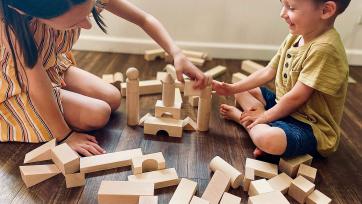
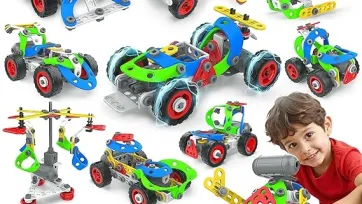
Building sets don't tell children what to create.
Art materials don't decide what to draw.
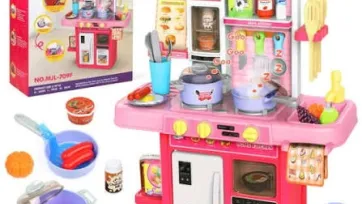
Play kitchens don't write the menu.
The child completes the experience.
That's where imagination grows.
Try the "Box Challenge" This Weekend
Instead of recycling the next large cardboard box immediately, keep it for a few days.
Place it in a safe area with a few simple supplies nearby:
-
Child-safe crayons or washable markers
-
Paper
-
Stickers
-
Child-safe tape
-
Fabric scraps or old blankets
Then step back.
Avoid giving instructions.
Instead of saying, "Let's make a castle," ask:
"What do you think this could become?"
You might be amazed by the answers.
One child may see a bus.
Another may see a bakery.
A third may crawl inside and announce it's a submarine exploring the deepest ocean.
There's no correct response—and that's the whole point.
What This Means the Next Time You Buy a Toy
The next time you're standing in a toy shop, don't let flashing lights or oversized boxes make the decision for you.
Think about what happens after the excitement of opening the gift.
Will your child still be discovering new ways to play next month?
Can they use their imagination?
Can they combine it with toys they already own?
Will the toy become part of their stories rather than simply performing for them?
These questions often lead to better purchases than focusing on features alone.
Frequently Asked Questions
Why do children enjoy cardboard boxes so much?
Because boxes have no fixed purpose. Children are free to imagine, invent and transform them into almost anything, making every play session different.
Is it normal for children to ignore expensive toys?
Yes. Many children are naturally more interested in activities that encourage creativity than in toys with limited ways to play. This is a common part of healthy development.
Are simple toys better than electronic toys?
Not always. Both have their place. However, toys that encourage open-ended play often provide greater replay value because children create the experience themselves.
What age do children enjoy imaginative play the most?
Pretend play usually becomes especially active between the ages of two and six, although many older children continue enjoying imaginative games in different forms.
Should I keep large cardboard boxes after deliveries?
If they're clean and safe, they can become excellent creative resources for temporary play projects before eventually being recycled.
Final Thoughts
The next time your child climbs into a cardboard box instead of playing with the expensive toy inside it, try not to feel disappointed.
Pause for a moment.
Watch what happens.
You'll probably see a child who isn't ignoring the toy at all.
You'll see a young mind building worlds that don't exist, solving problems that adults can't see and creating adventures that no instruction manual could ever provide.
That plain cardboard box isn't competing with the toy.
It's reminding us of something childhood has always known.
The most powerful toy in the room isn't always the one with the most buttons.
Quite often, it's the one that asks the child a simple question:
"What would you like me to become today?"
And every time, the answer is completely different.