Why Do Some Children Ignore Their Toys? 9 Surprising Reasons Every Parent Should Know
Introduction
One afternoon, Sarah watched her four-year-old wander into the playroom.
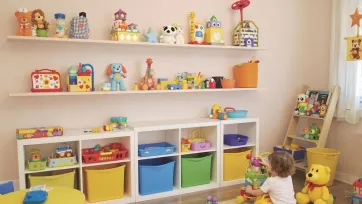
Shelves were neatly organised.
Building blocks were stacked in colourful baskets.
Toy cars waited in perfect rows.
There were puzzles, dolls, books and enough toys to fill an entire corner of the house.
Her son looked around for a few seconds.
Then he walked into the kitchen, picked up a wooden spoon and a mixing bowl, and spent the next forty minutes pretending to cook dinner for his teddy bear.
The toys stayed exactly where they were.
If this sounds familiar, you're not alone.
Many parents quietly wonder whether they've wasted money on toys their children barely touch. Others worry that a lack of interest means something is wrong.
In most cases, the explanation is far simpler.
Children don't reject toys because they dislike playing. They reject toys when those toys no longer match the way their imagination, curiosity or stage of development works.
Understanding why this happens can help you make better toy choices, reduce unnecessary spending and create a play environment that genuinely encourages creativity.
Let's explore the reasons behind one of the most common parenting questions.
Reason #1: Too Much Choice Can Feel Overwhelming
Imagine opening a streaming service with fifty thousand films.
Finding one to watch suddenly feels like hard work.
Children experience something similar when they're surrounded by dozens of toys.
Instead of settling into one activity, they move quickly from shelf to shelf, never quite deciding where to begin.
This isn't laziness.
It's decision fatigue.
Parents often notice that when the number of available toys is reduced, children actually spend longer playing.
Reason #2: The Toy Solves Every Problem for Them
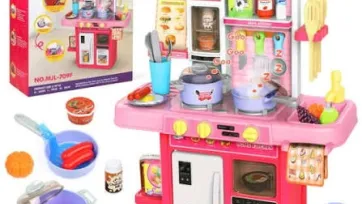
Some toys leave almost nothing for children to imagine.
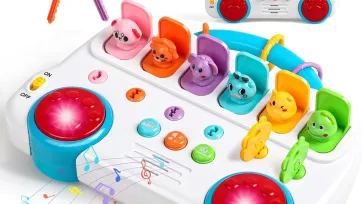
Press a button.
Watch the lights.
Listen to the sounds.
Repeat.
After a while, the experience becomes predictable because the toy always behaves in exactly the same way.
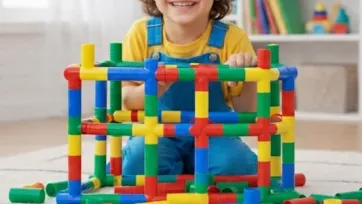
Now compare that with a pile of wooden blocks.
Today they're a bridge.
Tomorrow they're an airport.
Next week they're part of a zoo.
The toy changes because the child changes.
That's what keeps it interesting.
Reason #3: Your Child Has Simply Outgrown It
Children grow remarkably quickly.
The puzzle that fascinated them six months ago may now feel too easy.
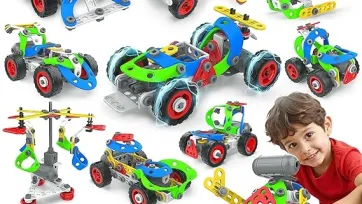
Likewise, a complex construction set intended for older children can feel frustrating rather than enjoyable.
Good play sits in the middle.
It should feel challenging enough to be interesting but achievable enough to build confidence.
When toys no longer match a child's developmental stage, they're often left untouched.
Reason #4: Everyday Objects Feel More Interesting
Parents sometimes laugh when a child chooses a cardboard box over an expensive toy.
Yet this behaviour makes perfect sense.
A saucepan can become a drum.
A blanket can become a superhero cape.
A cardboard tube can become a telescope.
Ordinary household objects have one huge advantage.
They don't come with instructions.
Children decide what they become, and that freedom often makes them more exciting than highly structured toys.
Reason #5: Play Needs a Story
Children rarely fall in love with objects.
They fall in love with stories.
A toy dinosaur isn't just a dinosaur.
It becomes the guardian of a volcano.
A teddy bear isn't just a teddy.
It's the patient at a pretend hospital.
When toys fail to inspire storytelling, they often fail to hold attention.
The toys children return to again and again are usually the ones that fit naturally into the imaginary worlds they're constantly creating.
Reason #6: They Need Someone to Start the Adventure
Parents often hear the phrase, "Will you play with me?"
It doesn't always mean a child needs constant company.
Sometimes they simply need someone to help the story begin.
A five-minute conversation can completely change what happens next.
Instead of saying:
"Go and play with your toys."
Try asking:
-
"Who's the captain of this spaceship?"
-
"Why is this dinosaur hiding?"
-
"Who lives in this castle?"
Once the story starts, many children continue happily on their own.
Adults don't need to lead the game.
They simply help open the first chapter.
Reason #7: The Play Environment Is Distracting
Imagine trying to read a book while the television is on, a tablet keeps making sounds and people are constantly walking past.
Concentrating becomes difficult.
Children experience the same challenge.
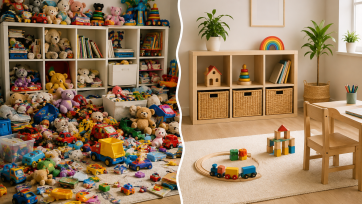
A play area packed with flashing lights, loud electronic toys and visual clutter can make it harder to settle into imaginative play.
Interestingly, many nursery classrooms are designed with calm colours, organised shelves and clearly defined play spaces.
The aim isn't to make the room look tidy.
It's to help children focus.
Sometimes changing the environment has a bigger impact than buying another toy.
Reason #8: They're Craving Real-Life Experiences
Children naturally imitate the world around them.
If they've been watching a parent cook, they may suddenly become interested in making pretend meals.
After a visit to the airport, every chair in the house becomes an aeroplane.
Following a trip to the zoo, stuffed animals turn into safari adventures.
This explains why a child might ignore a toy one day and become fascinated by it after a new experience.
Play is often a reflection of life.
The richer a child's experiences, the richer their imaginary games become.
Reason #9: They Don't Need Another Toy
This might be the hardest truth for adults to accept.
Sometimes children simply have enough.
Not because they don't enjoy toys.
Because they already have everything they need to create wonderful games.
Adding another toy doesn't always improve play.
Occasionally it has the opposite effect by creating one more choice, one more distraction and one more item competing for attention.
Many parents discover that introducing fewer new toys actually leads to longer, happier play sessions.
What Parents Can Do Instead
If your child rarely plays with their toys, resist the temptation to rush out and buy something new.
Instead, experiment with small changes.
Rotate a few toys every month instead of leaving everything available.
Create open floor space where children can spread out and build.
Join in for the first few minutes of a game before quietly stepping back.
Introduce simple materials such as cardboard boxes, blankets, recycled tubes or craft supplies.
Most importantly, observe rather than assume.
Children often tell us exactly what kind of play they enjoy—we simply have to watch.
Frequently Asked Questions
Is it normal for children to ignore their toys?
Yes. It's extremely common. Children often prefer activities that allow them to imagine, build or create rather than toys with only one fixed purpose.
Should I buy new toys if my child seems bored?
Not immediately. Try rotating existing toys, changing the play environment or introducing new ways to use toys already at home before spending more money.
Why does my child play with household objects instead?
Everyday objects have no fixed rules. They encourage creativity because children decide what each object represents.
Can too many toys reduce concentration?
For some children, yes. A very large number of choices can make it harder to focus on one activity for an extended period.
How can I encourage independent play?
Offer a manageable selection of toys, create a calm play space and help your child begin a story instead of directing the entire game. As their confidence grows, many children naturally continue playing on their own.
Final Thoughts
If your child walks past a shelf full of toys and heads straight for a cardboard box, a blanket or the kitchen cupboards, don't assume something has gone wrong.
In many ways, the opposite is true.
They're doing exactly what children have always done.
They're searching for something they can transform.
Something they can control.
Something that becomes whatever their imagination needs it to be.
The goal of a good toy isn't to keep a child busy.
It's to give them the freedom to invent, explore and tell stories that belong entirely to them.
When parents understand that difference, shopping becomes easier, play becomes richer and children often rediscover the joy of toys they already own.